How to Avoid Knee Surgery: A Guide for Kolkata, Delhi, and Panchkula
“You need a knee replacement” is often delivered as a verdict, not a discussion. For thousands of patients in Kolkata, Delhi, and Panchkula, it is the moment fear of surgery collides with years of stairs, temple visits, and floor-sitting culture that metal implants do not respect.
Quick Answer: Many patients avoid knee replacement by treating the metabolic and inflammatory drivers of osteoarthritis with AI-guided phytomedicine — OPTM reports 89% surgery avoidance [Source] among suitable candidates without hospitalisation
Why Surgery Is Presented as Inevitable (And When It Is Not)
Knee replacement is life-changing for some end-stage mechanical failures. It is over-offered for many Grade 2–3 patients who still have biological headroom: reducible synovitis, correctable muscle imbalance, and enzyme-driven cartilage attack that imaging labels simply as “OA.”
- Surgery excels at: Irreversible deformity, failed non-surgical care with severe disability, select traumatic reconstructions.
- Surgery struggles with: Root inflammatory drivers, lifelong implant management, cultural mobility patterns (cross-legged sitting, squatting).
- Non-surgical precision excels at: Pathway-level inflammation, early–moderate OA, surgery-avoidance for motivated patients.
The Natural Avoidance Framework (Not Wishful Thinking)
“Natural” at OPTM does not mean unproven kitchen remedies. It means pharmaceutical-grade plant compounds, metabolic correction, and load management guided by objective markers — a clinical protocol, not hope.
- Diagnose chemistry, not geometry: X-ray grades OA; biomarkers explain speed of decline.
- Shut down cytokine-driven attack: Lower the signals that activate cartilage-degrading enzymes.
- Support chondrocyte and matrix environment: Create conditions for tissue resilience.
- Rebuild peri-articular muscle: Stable knees unload damaged compartments.
- Verify with retesting: Pain stories matter; marker trends decide protocol changes.
Grade-by-Grade Expectations
| OA grade | Primary goal | Realistic outlook |
|---|---|---|
| Grade 1–2 | Reverse drivers, full function | Highest surgery-avoidance potential |
| Grade 3 | Major pain cut, space protection | Strong functional recovery common |
| Grade 4 | Pain control, stability, delay surgery | Many improve; structural limits acknowledged |
| Any grade + red flags | Rule out infection/tumour/trauma | Medical/surgical pathways first |
What the OPTM Knee Protocol Includes
AI biomarker assessment
History, exam, multi-marker blood analysis with 97% diagnostic accuracy [Source] methodology for root-cause mapping, and a personalised plan discussion. Available in Delhi, Kolkata, and Panchkula.
Intensive phase (~42 days)
Targeted phytomedicine, nutritional correction, and movement prescription. Many patients continue working. Expected early signal: reduced morning stiffness and stair discomfort as inflammation falls.
Maintenance
Dose and activity taper based on retesting — the opposite of lifelong painkiller escalation.
Cost and Lifestyle Reality Check
Knee replacement packages in metro India commonly run into before counting lost wages, caregiver time, and possible revision decades later. OPTM’s non-surgical programmes are a fraction of lifetime surgical cost for patients who respond — with zero implant maintenance and preservation of floor-sitting mobility when biology cooperates.
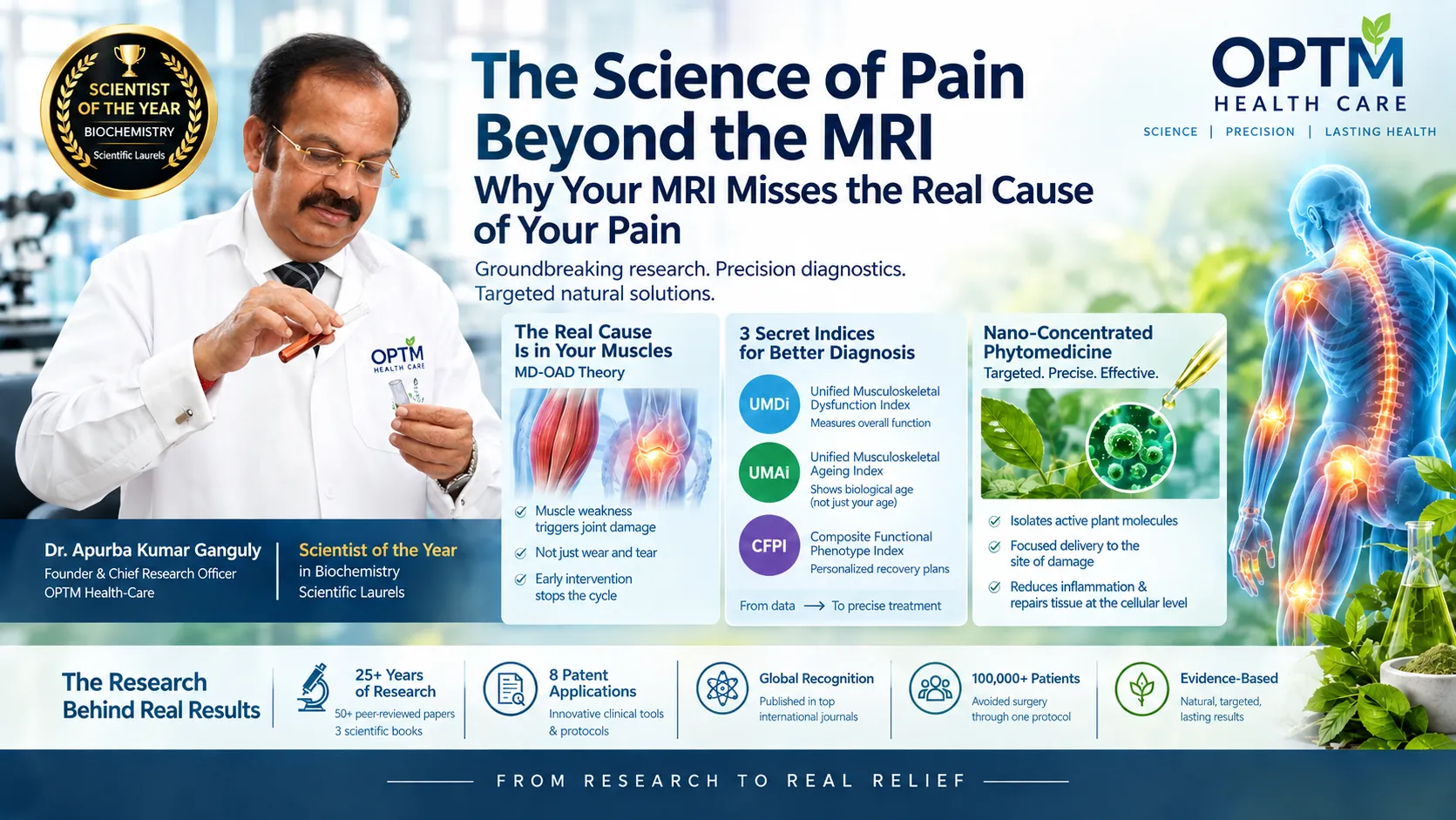
Across the organisation, outcomes include 100,000+ patients treated [Source] and high patient satisfaction (94%+ [Source]) when protocols are completed.
City Guide: Where to Start
- Kolkata — Gariahat: Strong option for patients across South Kolkata and eastern India seeking non-surgical knee care.
- Delhi — South Extension: Accessible for NCR patients advised replacement at large corporate hospitals.
- Panchkula — Sector 11: Tricity access for Chandigarh–Zirakpur–Panchkula patients wanting biomarker-first care.
Decision Checklist Before You Consent to Replacement
- Do I have a documented non-surgical trial with objective measures?
- Have inflammatory and metabolic drivers been measured?
- Is my grade and deformity truly end-stage mechanical failure?
- Have I understood revision risk and activity limits post-implant?
- Can I complete a 6–12 week precision protocol first without burning bridges?
If answers 1–2 are “no,” you are not fully informed yet — regardless of how confident the surgical quote sounded.
Cultural Mobility: Why Indian Knees Need a Different Conversation
Floor sitting, temple steps, Indian toilets, and joint family kitchens demand ranges of motion that Western implant counselling often dismisses as “optional lifestyle.” For many patients in Kolkata, Delhi, and Panchkula, those movements are identity and independence. Non-surgical restoration that preserves native anatomy is not nostalgia — it is functional culture.
That is why OPTM’s counselling includes realistic activity progressions: partial range first, strength around the joint, and gradual return to floor mobility when biomarkers and symptoms allow. The goal is not Instagram flexibility; it is grocery bags, grandchildren, and stairs without planning a recovery day afterward.
Myths That Push People Into Operating Theatres Too Early
- “Bone on bone means zero options.” Inflammatory pain can still fall dramatically; goals shift but hope is not irrational.
- “Physio failed, so surgery is next.” Physio without chemical mapping is an incomplete trial.
- “Age means replacement is normal.” Age is a risk factor, not a prescription.
- “Injections buy time harmlessly.” Repeated steroids can tax cartilage and delay definitive root-cause care.
- “Natural means slow and weak.” Standardised phytomedicine is dose-serious medicine with botanical origins.
A 30-Day Self-Audit Before You Sign Consent
Track morning stiffness minutes, night pain awakenings, stair pain (0–10), walk distance to first stop, and medication doses. Bring the log to your AI assessment. Patterns in that log plus markers beat a single clinic snapshot. Patients who arrive with data leave with sharper protocols — and clearer criteria for what “enough improvement to cancel surgery” means for them personally.
Remember organisational context: 100,000+ patients [Source] treated across OPTM’s history, 89% surgery avoidance [Source] among suitable candidates, and diagnostic mapping at 97% [Source] accuracy methodology. Statistics never replace your exam — they justify taking non-surgical precision seriously before irreversible metal.
If your surgeon is excellent, keep them in the loop. The best orthopaedic relationships are those where non-surgical gains are celebrated and surgery remains a tool, not a default identity for the clinic’s business model.
Bilateral Knee Pain and the “Replace Both” Conversation
Bilateral symptoms tempt bilateral surgical planning. Systemically, both knees often share the same inflammatory weather. Treating the shared chemistry can improve both sides even when one joint looks worse on film. OPTM protocols therefore prioritise systemic drivers while protecting the more symptomatic side with load rules — frequently changing the urgency of dual replacement discussions.
Second opinions without conflict
Bring your OPTM marker report to any surgical consult. Good surgeons appreciate objective non-surgical trials. If improvement reaches your pre-agreed function thresholds, postponing or cancelling elective replacement is a win for everyone except the implant invoice. That is appropriate medicine.
Document baseline and week-6 walk distance, stair score, and night pain. Families decide better with numbers than with fear. Combined with 89% surgery avoidance [Source] organisational framing for suitable candidates, your personal log becomes the tie-breaker.
Frequently Asked Questions
Q: Can bone-on-bone knees improve without surgery?
A: Pain and function often can, because much of Grade 4 pain is inflammatory. Full joint-space restoration is limited; goals are honest and still clinically valuable.
Q: Is phytomedicine just turmeric tablets?
A: No. OPTM uses standardised, clinical-potency compounds selected for your marker profile — not grocery-spice dosing.
Q: Will insurance cover non-surgical care?
A: Coverage varies by insurer and policy. Clinics can help with documentation; many patients still find total cost favourable versus surgery packages.
Q: How do I book?
A: Call +91 33 63 or book online for the assessment at your nearest OPTM clinic.
Q: Can both knees be treated together?
A: Yes. Bilateral patterns are common; protocols prioritise systemic drivers that affect both sides while addressing the more symptomatic joint.
Book the Assessment
Book your AI biomarker diagnostic assessment today
Related Clinical Resources