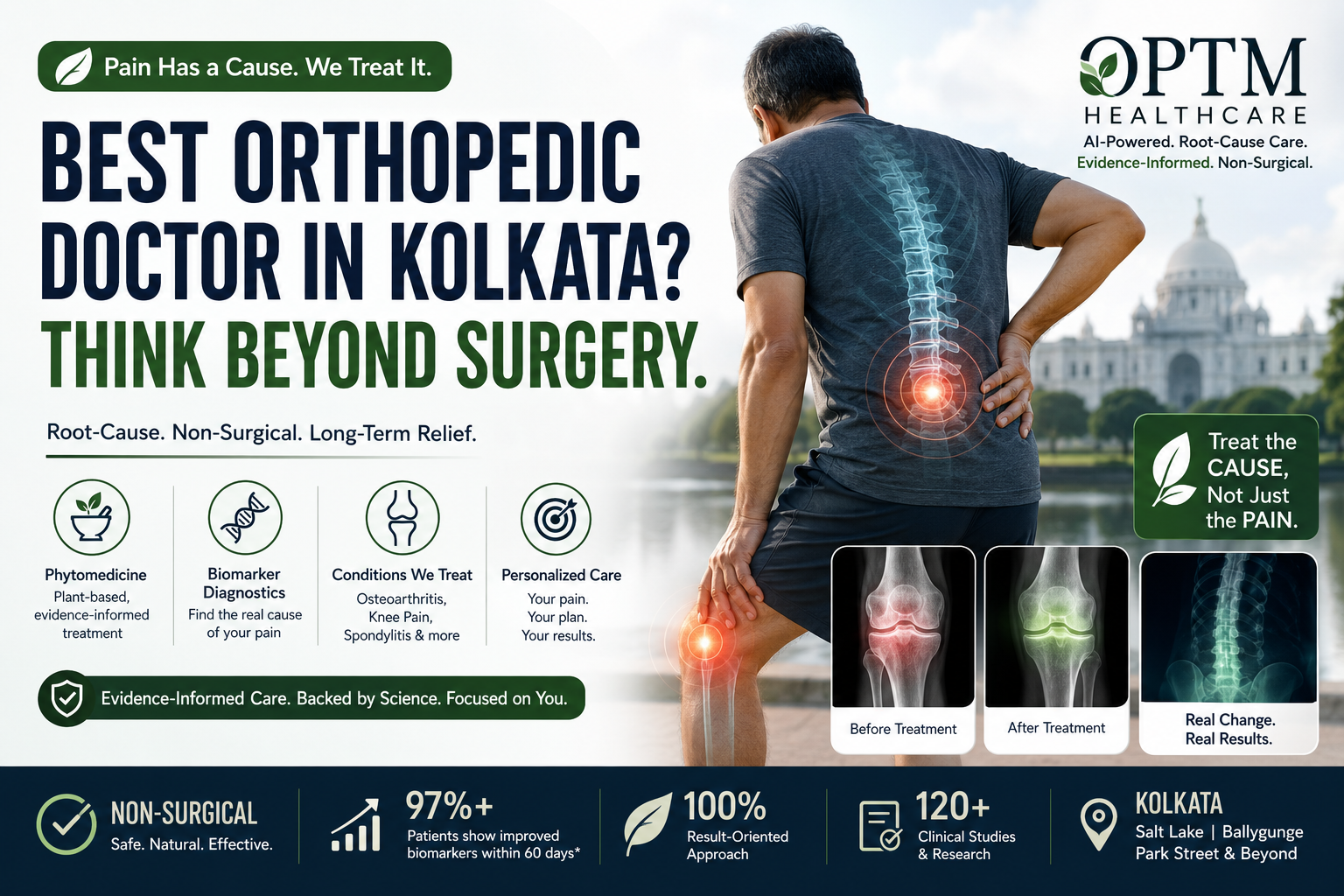
Best Orthopaedic Doctor in Kolkata? Sometimes That Means Skipping Surgery
Your knee hurts on the stairs. Your back locks up if you sit too long. You've tried a painkiller, maybe a steroid injection, and someone has already mentioned "replacement surgery" like it's inevitable.
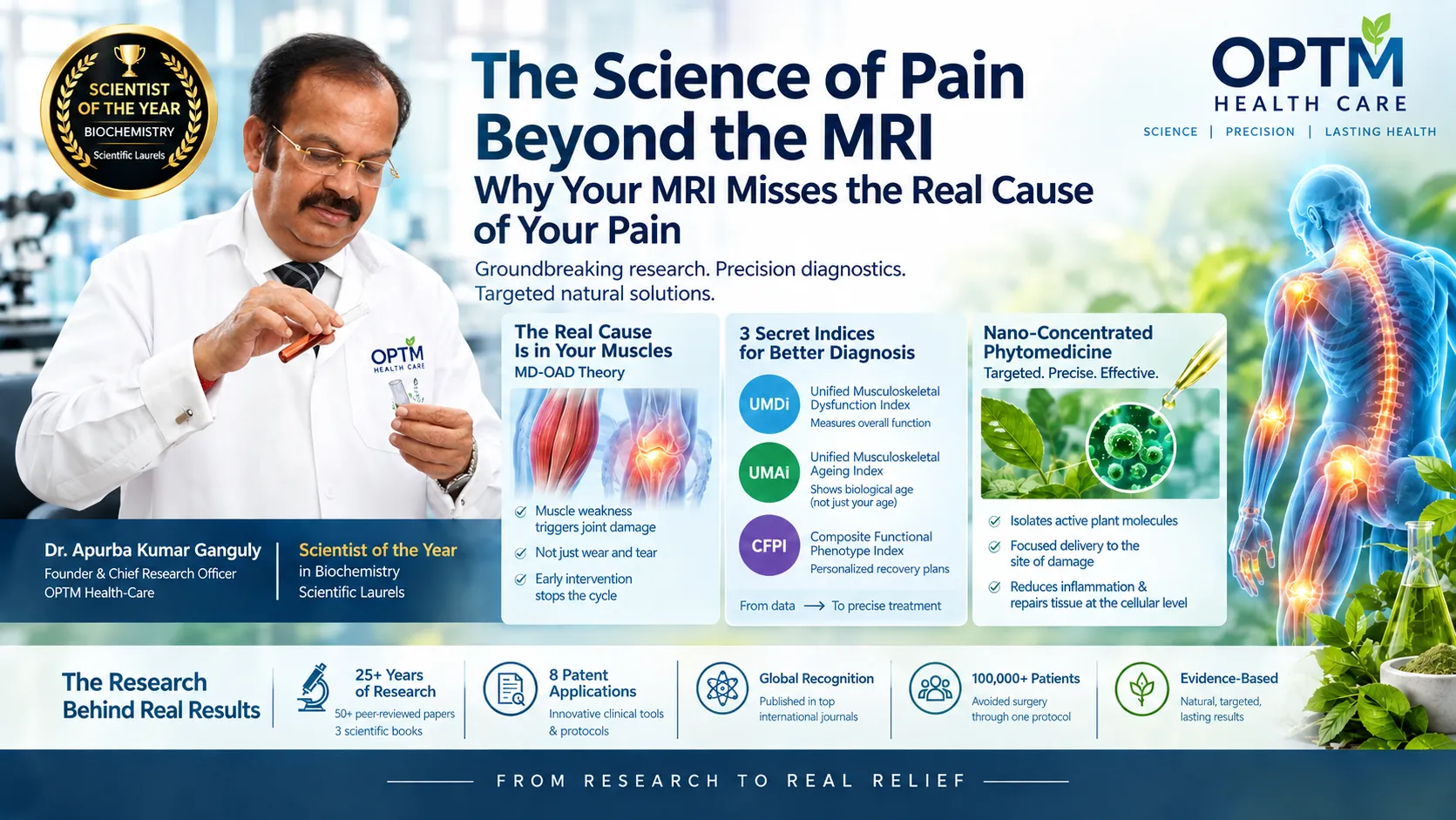
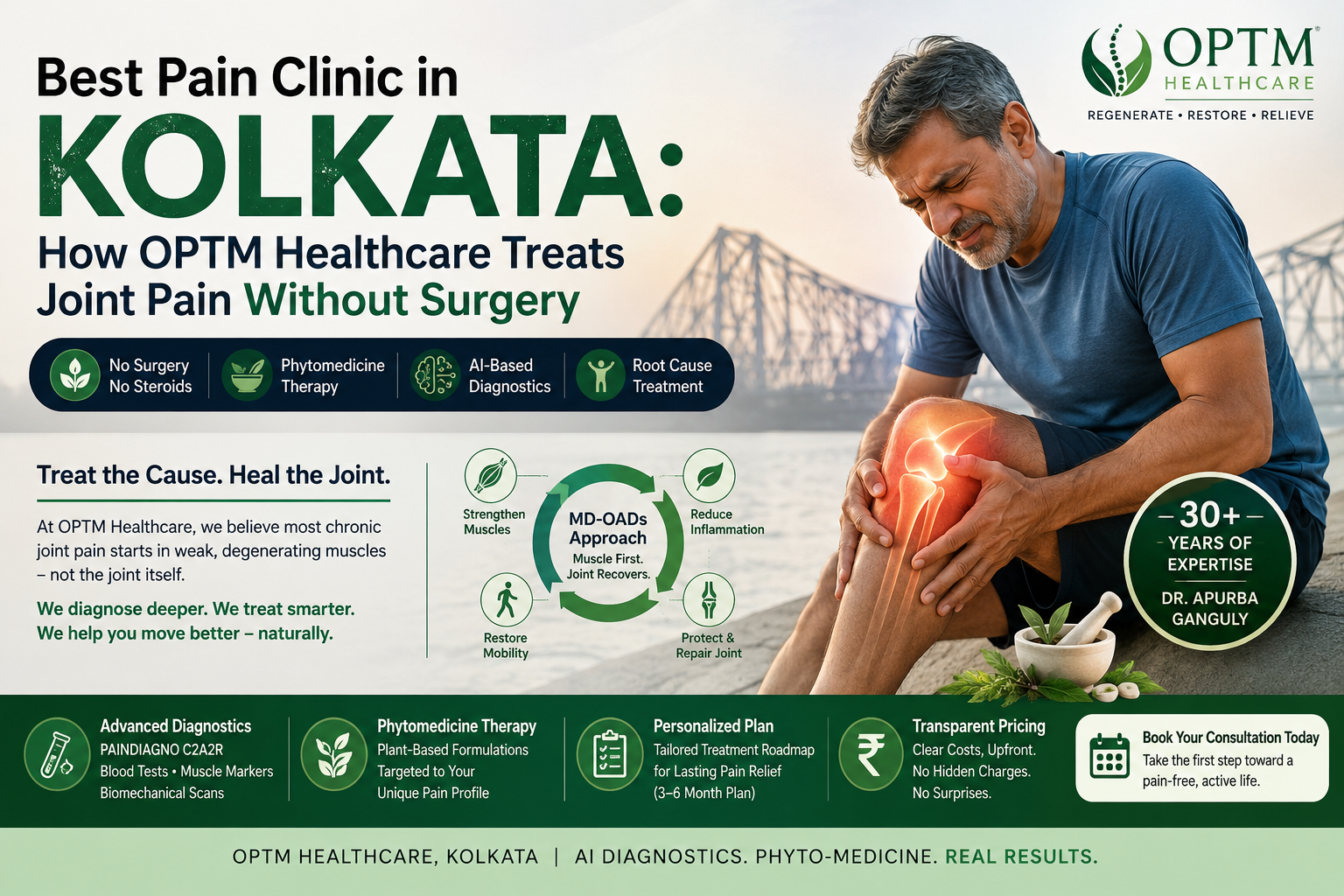
Quick Answer: For chronic, non-traumatic joint pain — osteoarthritis, knee pain, and spondylitis — the "best orthopedic doctor" in Kolkata may not be a surgeon. OPTM Healthcare combines AI biomarker diagnostics with pharmaceutical-grade phytomedicine to treat the actual driver of your pain without surgery, with 89% of its published cohort avoiding knee replacement [Source].
It doesn't have to be the next step. For a lot of people in Kolkata — from Salt Lake to Ballygunge to Park Street — the search for the best orthopedic doctor ends not with a surgeon's waiting room, but with a specialist who asks a different question first: what's actually causing this pain, and can we fix that instead of cutting around it?
That's the approach behind OPTM Healthcare's non-surgical model for osteoarthritis, knee pain, and spondylitis. Below is what that approach actually involves, how to evaluate whether it's right for you, and where it fits next to traditional orthopedic surgery.
What "Best Orthopedic Doctor in Kolkata" Should Actually Mean
Most people typing this search are hunting for the same thing: relief that lasts, without a hospital stay attached to it. Traditionally, that search leads to surgeons — because surgery is what orthopedics has historically been built around.
But for chronic, non-traumatic joint pain (as opposed to a fracture or acute injury), surgery isn't the evidence-based path. A growing number of patients are choosing specialists who focus on root-cause, non-surgical treatment — using detailed diagnostics to figure out exactly what's driving the pain (inflammation, cartilage wear, nerve compression, muscular imbalance) before deciding what to do about it.
OPTM Healthcare's model is built on two pillars:
- Biomarker and imaging-based diagnostics to identify the specific mechanism behind your pain, not just label it "arthritis" and move on.
- Phytomedicine — plant-derived compounds studied for anti-inflammatory and regenerative properties, applied as part of a targeted, personalized protocol rather than a generic supplement.
You can read more about the clinical basis for this approach on OPTM's research and evidence page.
Why Root-Cause Treatment Matters More Than Symptom Relief
A painkiller quiets the signal. It doesn't touch what's sending it.
That distinction matters for chronic conditions like osteoarthritis and spondylitis, where the pain usually has a specific, identifiable driver — inflammatory markers, cartilage breakdown, a compressed nerve, a muscular compensation pattern from years of favoring one side. Treat the driver, and the pain tends to ease and stay eased. Treat the symptom, and it tends to come back.
This is where diagnostics-first care changes the equation. Instead of starting with "let's manage this," the process starts with "let's find out exactly what this is." From there, a non-surgical knee pain treatment plan can be built around your specific findings — not a generic protocol handed to every patient with a sore knee.
An Illustrative Example (Not an Actual Patient Case)
To make this concrete: imagine a 62-year-old patient with osteoarthritis in both knees, told by multiple surgeons that replacement is her real option. A detailed diagnostic workup instead identifies specific inflammatory markers and localized cartilage degradation — findings that point toward a targeted phytomedicine protocol plus guided rehabilitation, rather than a scalpel.
This is the kind of case the non-surgical model is designed for: pain rooted in an identifiable, treatable process, not structural damage severe enough to require replacement. Real outcomes vary by patient, diagnostic findings, and how advanced the condition is — which is exactly why the diagnostic step matters so much.
Traditional Surgery vs. Non-Surgical Phytomedicine: A Side-by-Side Look
| Traditional Surgery | Non-Surgical Phytomedicine | |
|---|---|---|
| Primary focus | Repair or replace damaged structures | Identify and treat the root biological cause |
| Core methods | Injections, arthroscopy, joint replacement, pain medication | Biomarker diagnostics, targeted phytomedicine, rehabilitation |
| Recovery time | Weeks to months, especially post-surgery | Generally shorter, progressive, non-invasive |
| Main risks | Infection, anesthesia complications, blood clots | Low; monitored for individual tolerance |
| Best suited for | Acute injury, severe structural damage | Chronic pain from osteoarthritis, spondylitis, or overuse where the joint structure is largely intact |
| Cost pattern | Often high, front-loaded (surgery + hospitalization) | Spread across a treatment course, varies by case |
Neither path is universally "right." A knee with bone-on-bone contact and no cartilage left may genuinely need surgery. A knee with early-to-moderate degeneration and active inflammation may respond well to a non-surgical protocol. The point of proper diagnostics is finding out which one you're actually dealing with — before a decision gets made for you.
How OPTM's Diagnostic-First Process Works
Here's what the process generally looks like, from first visit to treatment:
- full diagnostics — imaging plus biomarker testing to identify inflammation levels, cartilage condition, and contributing factors specific to you. This typically takes one to two hours.
- Root-cause mapping — your results are used to pinpoint what's actually driving the pain, rather than defaulting to a generic diagnosis.
- Personalized phytomedicine protocol — a treatment plan built around your specific findings, not a one-size-fits-all supplement regimen.
- Monitoring and adjustment — follow-ups roughly every two to four weeks to track progress and adjust the plan as your body responds.
You can see the full breakdown on OPTM's 4-step treatment process page.
Timelines vary by condition and severity, but many patients notice reduced pain and improved mobility within the first four to eight weeks, with fuller results building over several months. That's a general pattern, not a guarantee — your specialist should give you a realistic range based on your own diagnostics, not a marketing number.
Mistakes to Avoid When Choosing a Path Forward
A few patterns show up again and again in people who end up frustrated with their treatment choice:
- Jumping straight to surgery without exploring whether the condition would respond to non-surgical treatment first.
- Treating the symptom on repeat — painkillers, injections, more painkillers — without ever diagnosing the underlying driver.
- Not asking hard questions about a clinic's diagnostic depth or how they measure whether treatment is actually working.
- Accepting a generic plan for a condition that's highly individual — what works for one person's spondylitis may do nothing for another's.
The fix for all four is the same: insist on a real diagnostic workup before committing to a treatment path, surgical or not, and ask what happens if the first approach doesn't get you the results you expect.
What to Expect If You Start Treatment
Most patients begin with a diagnostic consultation, followed by a personalized plan built around their results. From there, expect regular check-ins (every two to four weeks is typical), adjustments as your body responds, and guidance on rehabilitation exercises and lifestyle factors that support the treatment rather than working against it.
If you want a sense of how this has played out for other patients, OPTM's patient stories page has documented cases you can look through directly.
Frequently Asked Questions
Q: Is non-surgical treatment actually effective for osteoarthritis, or is surgery always better long-term?
A: It depends on how advanced the condition is. Early-to-moderate osteoarthritis with active inflammation often responds well to non-surgical, root-cause treatment. Severe structural damage — bone-on-bone contact, for example — is more likely to need surgical intervention. A proper diagnostic workup is what tells you which category you're in.
Q: What is phytomedicine?
A: Phytomedicine refers to plant-derived compounds used for therapeutic purposes, based on active research into their anti-inflammatory and regenerative effects. In a clinical setting, it's applied as part of a monitored, personalized protocol — not taken as a generic over-the-counter supplement.
Q: What does OPTM's diagnostic process actually check for?
A: It combines imaging with biomarker testing to look at inflammation levels, cartilage condition, and other factors specific to your case, so treatment can be targeted rather than generic.
Q: Does OPTM treat spondylitis as well as knee pain?
A: Yes — the same diagnostic-first, phytomedicine-based approach is used for spondylitis, osteoarthritis, and other chronic joint conditions, tailored to what the diagnostics show for each patient.
Q: How long before I see results?
A: Many patients report noticeable improvement within four to eight weeks, with continued gains over several months. This varies by condition severity and individual response — your specialist should give you a personalized estimate rather than a fixed number.
Q: Are there real alternatives to knee replacement surgery?
A: For many patients with moderate osteoarthritis, yes. Non-surgical protocols aimed at reducing inflammation and supporting joint function can be a legitimate alternative — though the right choice always depends on your specific diagnostic findings.
A Note on Making This Decision
Chronic pain decisions deserve real evidence, not urgency. For general, independently reviewed information on osteoarthritis and joint pain management, the World Health Organization's musculoskeletal health resources and peer-reviewed research on PubMed are useful starting points alongside any conversation with a specialist.
If you're weighing surgery against a non-surgical path, the most useful next step is usually the same one: get a proper diagnostic workup so the decision is based on your actual condition, not a guess. You can book a consultation and diagnostic assessment through OPTM Healthcare to find out where you stand.
*Individual results vary. This article is for informational purposes and isn't a substitute for a personalized medical evaluation.
Book the Assessment
Book your AI biomarker diagnostic assessment at OPTM Gariahat — starting from
Related Clinical Resources