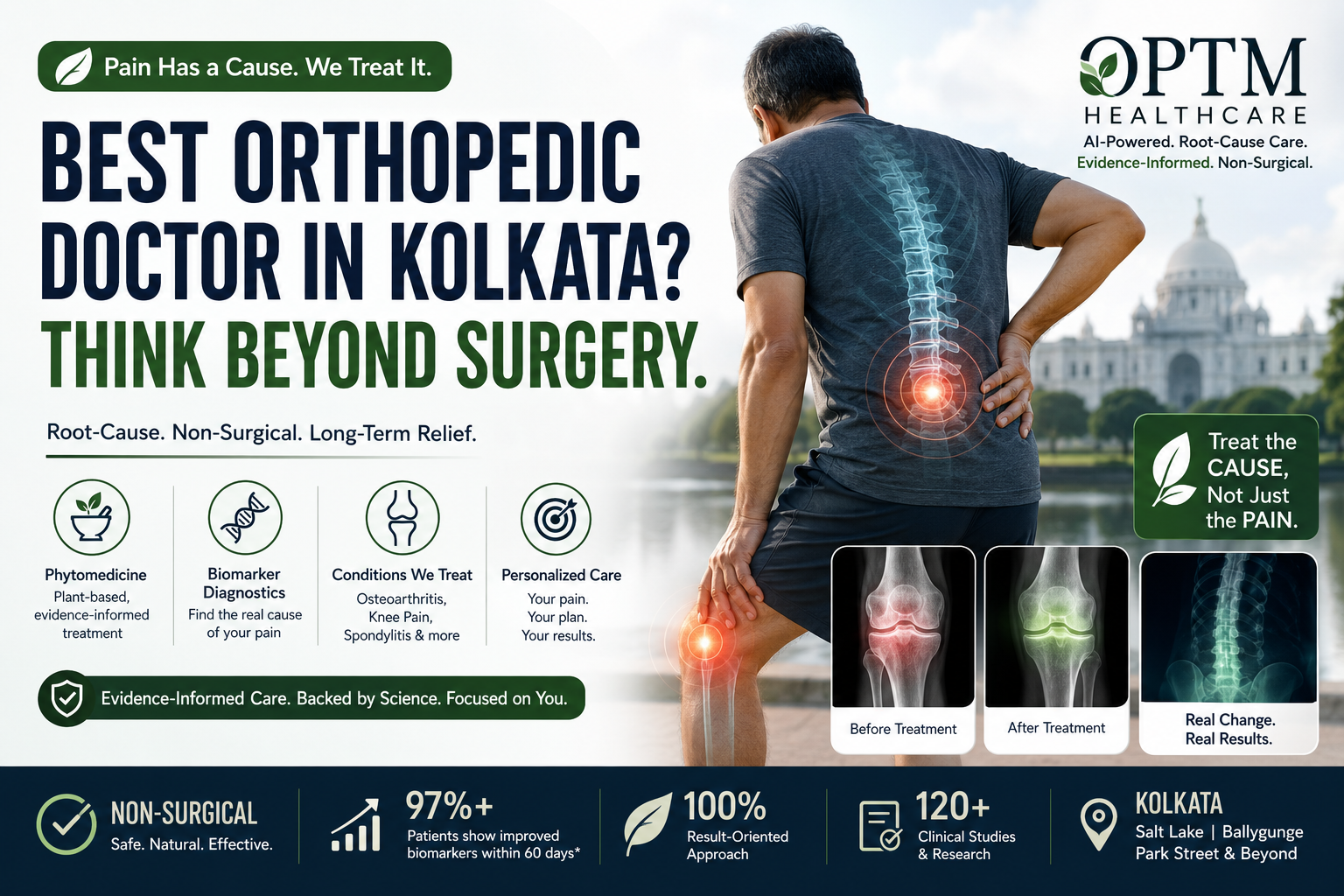
Non-Surgical Knee Pain Treatment in India: What OPTM Actually Does
Knee pain in India is treated like a waiting room for replacement. Painkiller, injection, “come back when it is bone on bone.” A lot of those knees still have biology that can change — if someone measures it.
Quick Answer: Non-surgical knee treatment at OPTM uses an AI biomarker panel to name the inflammatory and metabolic drivers of osteoarthritis, then applies standardised phytomedicine. The aim is less pain and a joint that still belongs to you — without surgery, steroids, or a lifetime of NSAIDs.
Osteoarthritis is the common story. Cartilage thins. The lining inflames. Quadriceps waste. People are told this is wear and tear, as if a joint were a tyre. It is not. Cytokines such as IL-1β and TNF-α actively chew the matrix. That is a chemical process. Chemical processes can be treated.
Why the knee actually hurts
- Osteoarthritis. Cartilage breakdown driven by inflammatory cytokines, not only years of walking.
- Cartilage that cannot keep up. Chondrocytes slow down. Breakdown outruns repair.
- Synovial inflammation. The lining swells. Stiffness in the morning is often this, not “weather.”
- Sport and load. Ligament, tendon, or cartilage insult from a match or from years of the same step.
- Weight and posture. Extra load on the inner compartment. The biology still has to be treated; the load still has to change.
Most people wait until stairs are a negotiation. By then the biochemistry has been running for years. An X-ray at that point looks dramatic. It still does not tell you which pathway is active.
What OPTM actually does
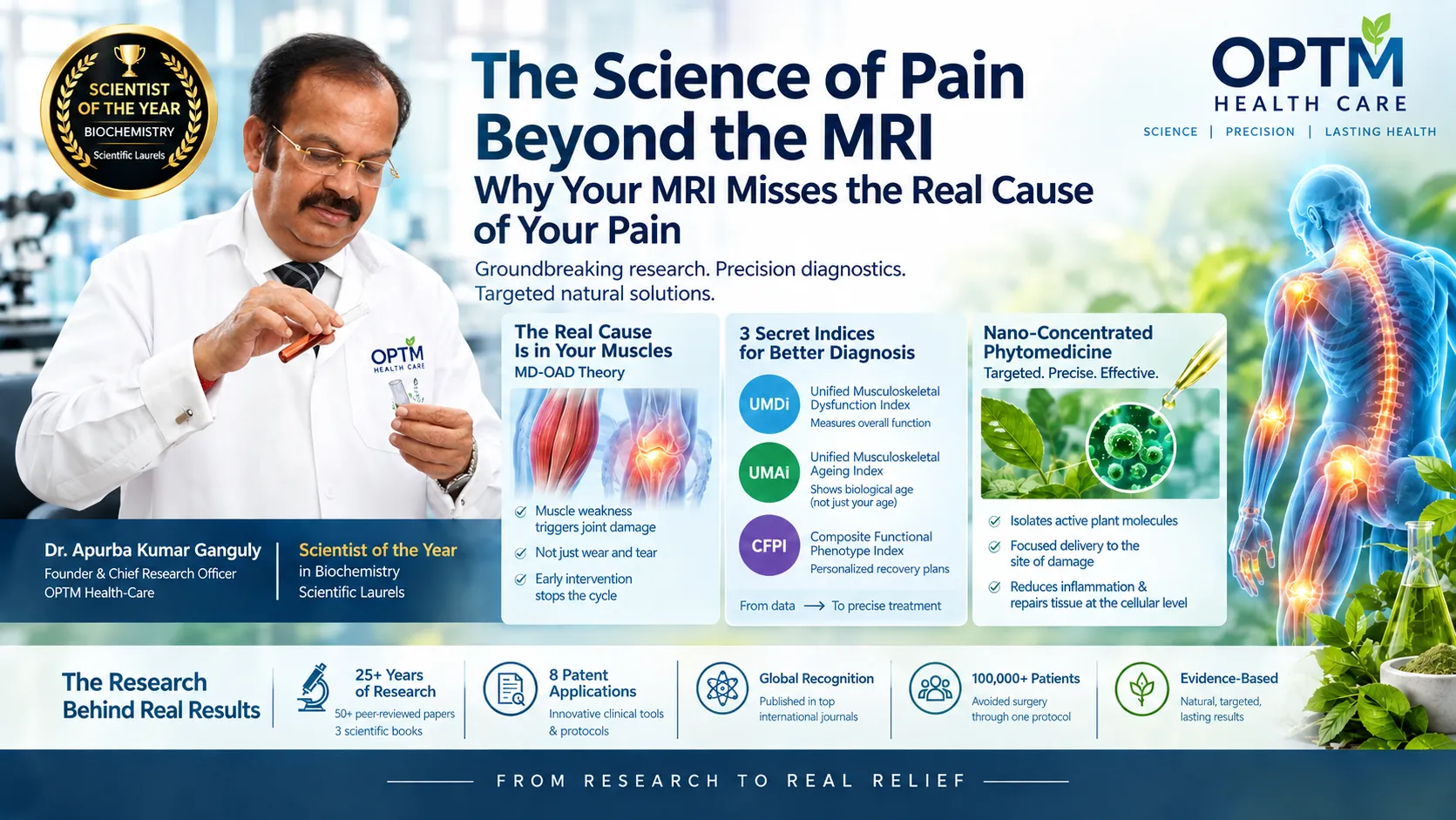
The panel is 60+ protein biomarkers — CRP, IL-6, MMP-3, Aldolase-A among them. That is a molecular picture of this knee, not a population average. Phytotherapy uses botanical extracts standardised to a measured dose, aimed at chondrocytes and at the enzymes that eat cartilage. The programme is typically 42 days and includes nutrition and movement correction. You keep walking. You do not disappear into a ward.
88% of patients maintain the improvement at 12-month follow-up. That number matters more than a good week in month one.
How this differs from a cortisone shot
Cortisone is a volume knob. It can make a week quieter. It does not rebuild cartilage, and repeated shots can thin tissue. Phytomedicine is slower and less theatrical. It is aimed at the pathway the blood named. That is the difference between managing a season and trying to change the joint’s chemistry.
The AI’s job
A single clinician cannot hold tens of thousands of prior cases in working memory. The model matches your panel against prior outcomes so the first protocol is less of a guess. Imaging still has a place. It shows shape. It does not show IL-6.
Frequently Asked Questions
What are the main causes of knee pain that OPTM treats without surgery?
Osteoarthritis, cartilage loss, synovial inflammation, overload, and post-injury degeneration. The blood test tells us which of those is active in you.
How is this different from a cortisone injection?
Cortisone suppresses a flare. It does not treat the metabolic or inflammatory driver. This protocol does. That is why the 12-month number exists.
How long until I notice a change?
Many people feel less stiffness in the first few weeks. The full protocol is usually 6–12 weeks, with a 42-day core programme.
Can elderly patients with severe OA do this?
Yes. Age is not a disqualification. Grade of OA and the biomarker profile decide the plan. Replacement remains an option if this fails — it is not the only door.
Where is this available in India?
OPTM clinics in Kolkata, Delhi, and Panchkula (Sector 11). Same protocol, not a lighter “outstation” version.
Book the Assessment
If you have been told the knee is finished, get the blood done first. Kolkata, Delhi, Panchkula.
Related Clinical Resources