Pain Clinic in Kolkata: How OPTM Treats Joint Pain Without Surgery
If your knee locks up every time you take the stairs, you've probably already tried the usual first line of defense: painkillers, a knee brace, maybe a round of physiotherapy. Some of it helped for a week. None of it fixed the actual problem. That's the moment most people in Kolkata start searching for a pain clinic that does something different — not another prescription, but an answer for why the pain keeps coming back.
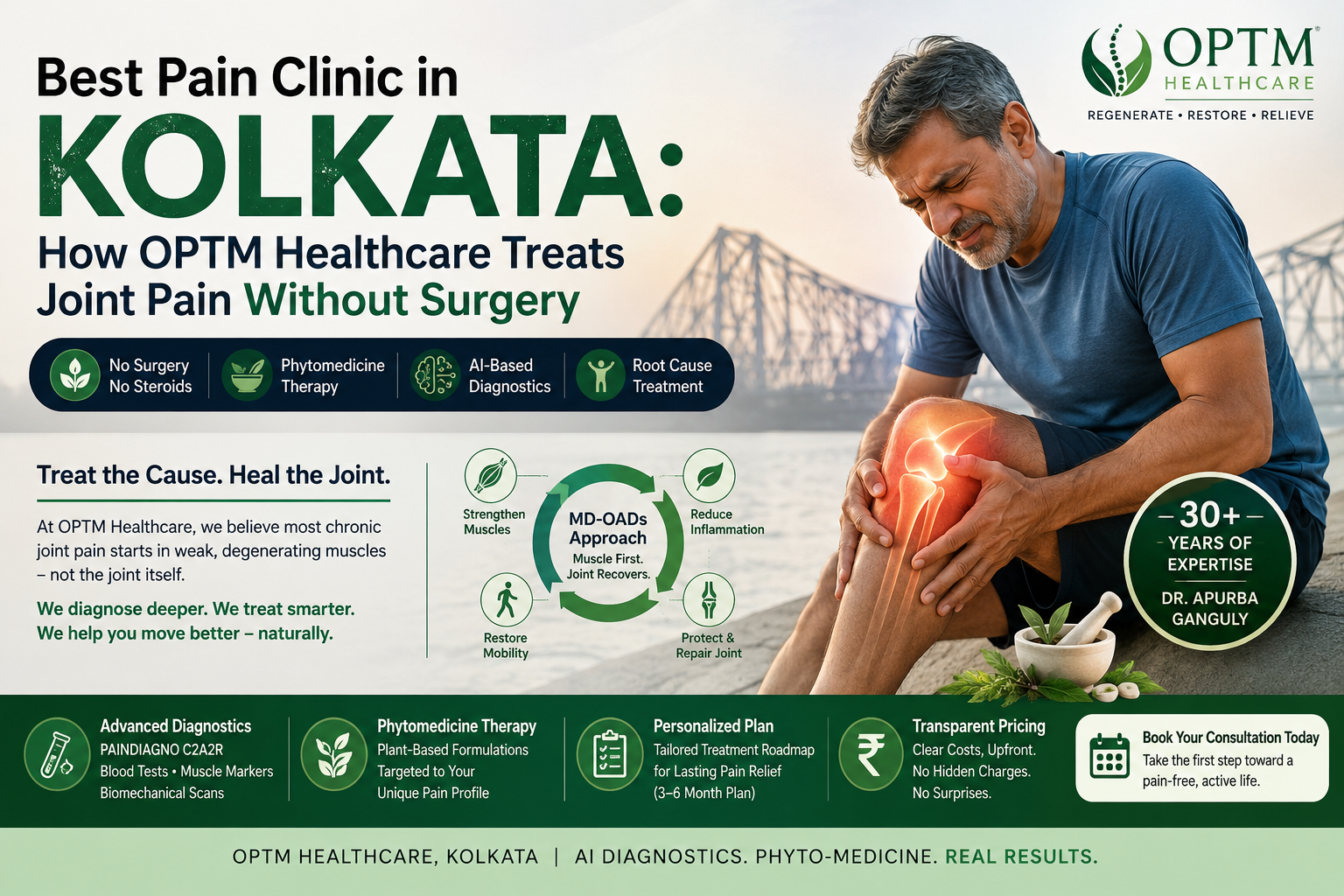
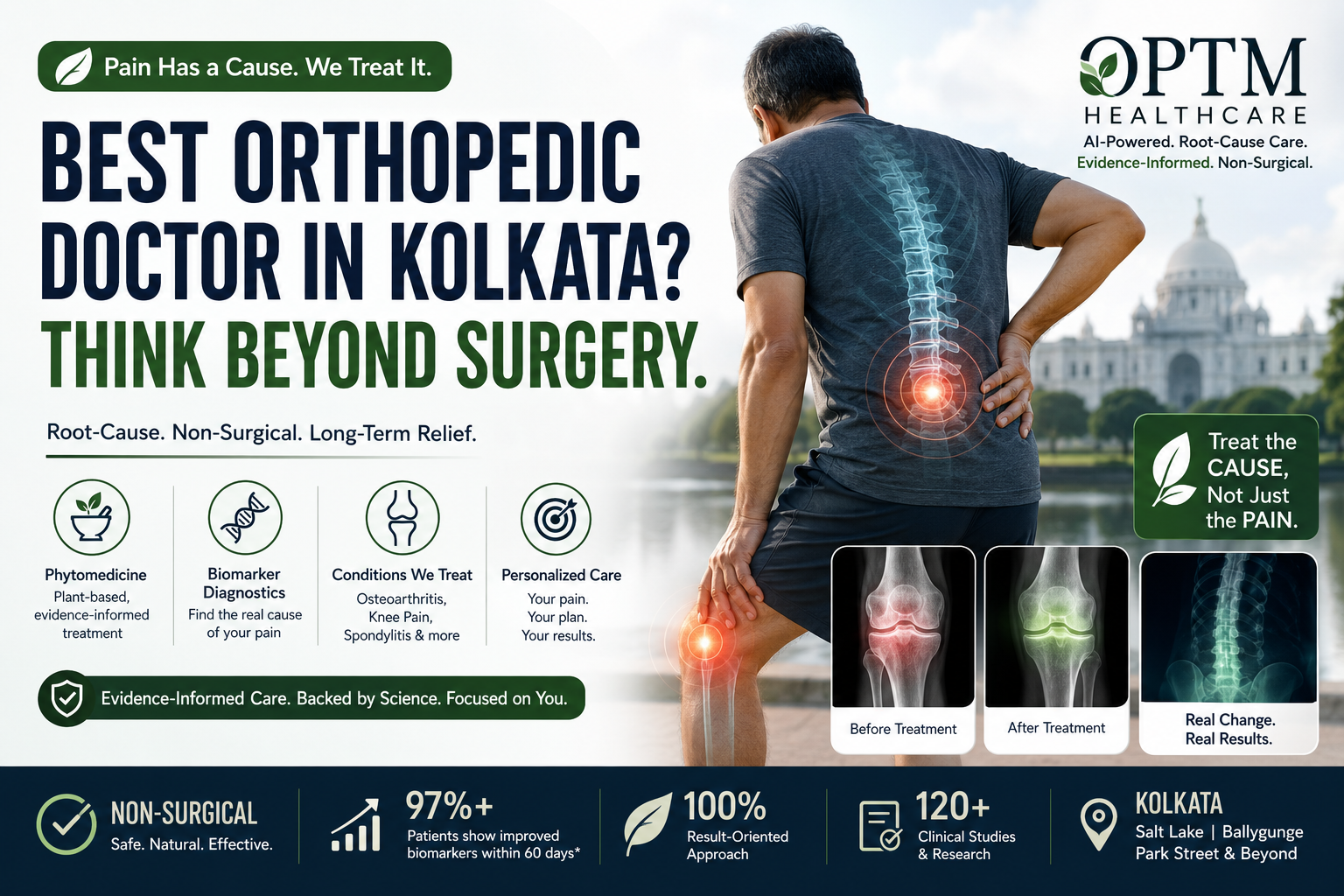
Quick Answer: The best pain clinic in Kolkata for chronic joint pain isn't necessarily a surgical centre. OPTM Healthcare in Gariahat uses AI biomarker diagnostics and pharmaceutical-grade phytomedicine to treat knee osteoarthritis, cervical and lumbar spondylosis, and degenerative joint pain without surgery — reporting 89% surgery avoidance [Source] across a 1,000+ patient cohort [Source] (2019–2024).
This guide breaks down what to actually look for in a pain clinic, and walks through how one Kolkata option — OPTM Healthcare — approaches joint pain using AI-based diagnostics and plant-based (phytomedicine) treatment instead of surgery or steroids.
What to Look For in a Pain Clinic
Not every clinic that treats knee pain treats the same thing. Two clinics can see the same X-ray and land on completely different plans — one hands you an anti-inflammatory and a referral for a knee replacement, another wants to know why the joint is degenerating in the first place. That difference matters more than location or reviews.
Before you book a consultation anywhere in Kolkata, check for these:
- Diagnosis before treatment. A clinic that prescribes the same painkiller-and-brace combo to everyone hasn't actually diagnosed you.
- A clear explanation of why you're in pain — not just "arthritis," but what's driving it (muscle imbalance, inflammation, cartilage wear, nerve involvement).
- Non-surgical options presented honestly, with real trade-offs, not surgery pushed as the path forward.
- Transparent pricing given upfront, not buried until after your first visit.
- A plan for the next 3–6 months, not just today's pain.
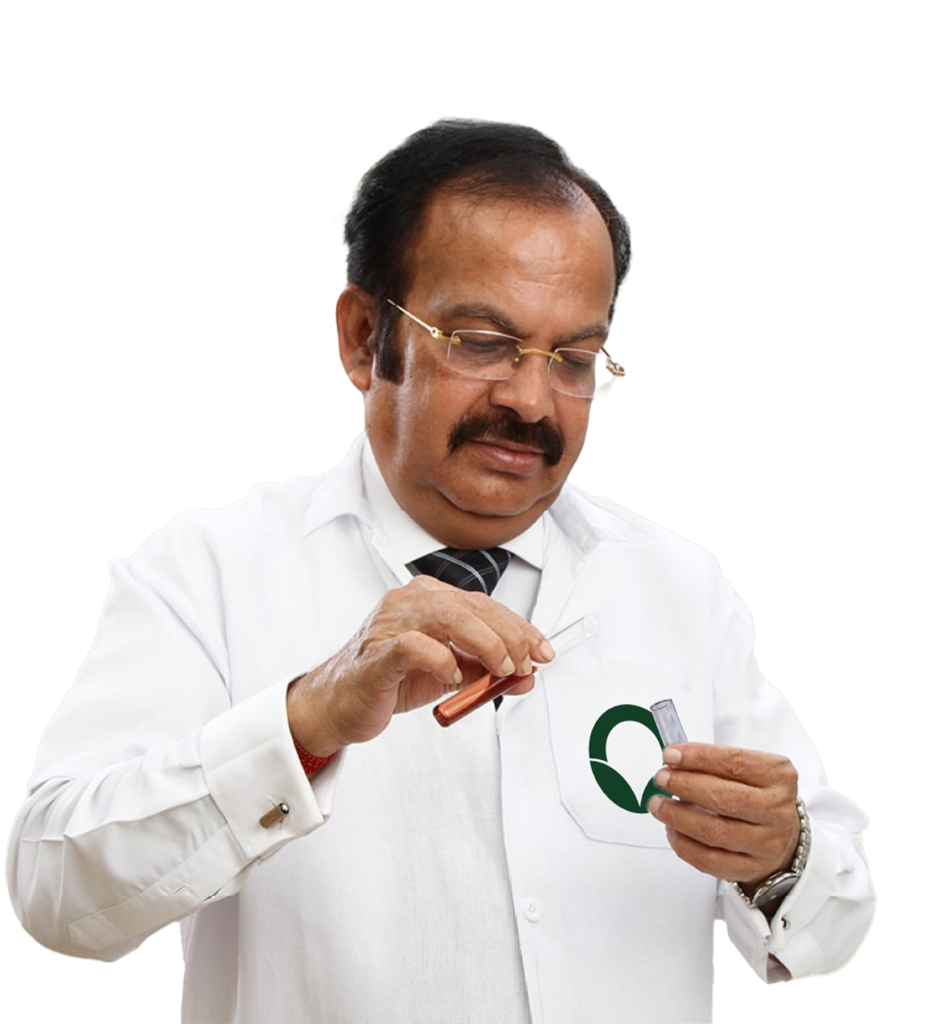
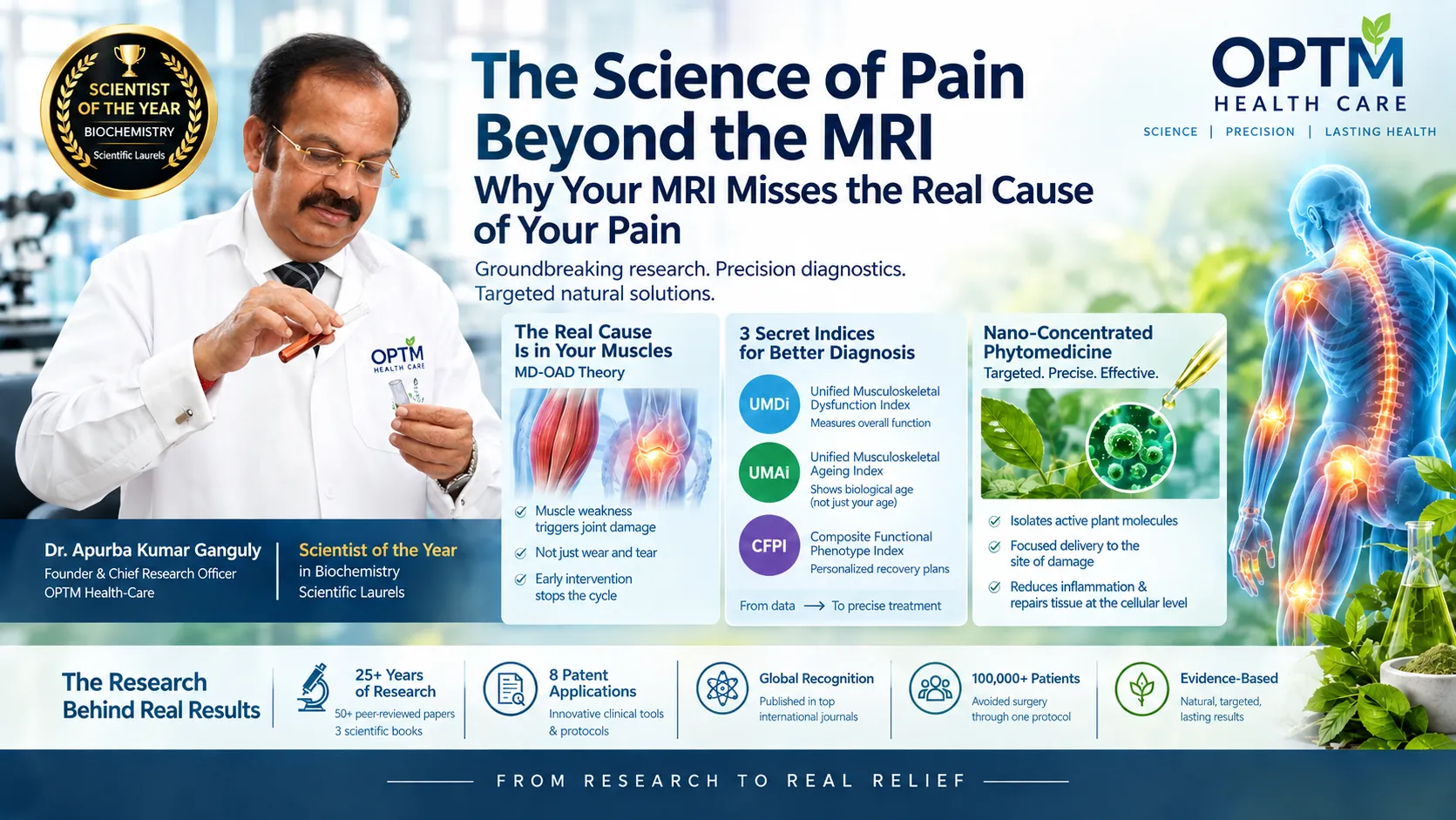
OPTM Healthcare, founded by Dr. Apurba Ganguly, builds its Kolkata practice around this exact idea: find the cause first, treat it with plant-based therapy, and skip the knife unless there's genuinely no other option.
Who Is Dr. Apurba Ganguly, and What Is Phytomedicine?
Dr. Ganguly has spent 35+ years researching musculoskeletal pain, and OPTM's clinical claim is that most chronic joint pain doesn't start in the joint — it starts in the muscles around it. Their working theory, called MD-OADs (muscle degeneration underlying osteoarthritic disorders), proposes that when the muscles supporting a joint weaken, the joint absorbs load it was never built to carry. Cartilage wears down. Pain follows. Treat the muscle, the theory goes, and the joint has a chance to recover on its own.
Phytomedicine is the treatment side of that theory: plant-derived compounds, applied topically or through targeted delivery, chosen for their anti-inflammatory and tissue-repair properties. It's not the same as generic herbal remedies bought over the counter — OPTM's formulations are tied to specific diagnostic findings for each patient, and the company points to peer-reviewed publications in journals including the International Journal of Phytomedicine and Pharmacognosy Journal as the research basis for the approach.
Step One: The Diagnostic Workup (What Actually Happens First)
Before any treatment starts, OPTM runs patients through a diagnostic protocol they call PAINDIAGNO C2A2R — a set of blood and imaging tests that go beyond a standard X-ray:
| Test | What It Checks |
|---|---|
| C-Reactive Protein (CRP) | Inflammation levels in the body |
| Creatine Phosphokinase (CPK) | Muscle tissue damage or breakdown |
| Aldolase test | Muscle degeneration markers |
| Anatomical/biomechanical scan | Joint asymmetry and load distribution |
The idea is simple: two people with "knee osteoarthritis" on paper can have completely different root causes, so a treatment plan built off a five-minute look at an X-ray is a guess, not a diagnosis. This phase typically takes 1–2 weeks and produces what OPTM calls a personalized pain profile before a single treatment is prescribed.
Step Two: The Phytomedicine Treatment Plan
Once the diagnostics are back, treatment is built around what they actually found — not a standard protocol applied to everyone with the same diagnosis. In practice, this usually includes:
- Targeted phytomedicine application — plant compound formulations matched to your specific inflammation and muscle-degeneration markers, most often applied topically to the affected joint.
- A biomechanics-driven exercise plan — built to rebuild the muscle support around the joint, not generic stretches.
- Anti-inflammatory nutrition guidance — diet adjustments aimed at lowering systemic inflammation.
- Progress re-checks — periodic re-testing to confirm the treatment is actually working before continuing it.
Most patients are told to expect a gradual course — noticeable improvement over 4–8 weeks, not overnight relief, since the goal is tissue-level change rather than symptom suppression.
Non-Surgical Treatment vs. Knee Replacement: The Real Trade-Offs
This is the comparison most people actually want before they commit to either path. Numbers below on the non-surgical side reflect figures OPTM Healthcare has published about its own patient cohort; knee replacement figures reflect commonly cited ranges for surgical care in India. Treat both as starting points for a conversation with a doctor, not a guarantee.
| Knee Replacement Surgery | OPTM's Phytomedicine Protocol | |
|---|---|---|
| Approach | Removes and replaces the damaged joint | Non-invasive; rebuilds supporting muscle and reduces inflammation |
| Recovery | Typically 6–12 months with intensive rehab | Weeks; gradual improvement over treatment course |
| Risks | Infection, blood clots, implant wear, revision surgery | Low; no reported major side effects in OPTM's published data |
| Reported outcomes | Varies by surgeon, hospital, and patient health | 89% avoided knee replacement [Source] (1,000+ cohort, 2019–2024) |
| Cost range | Roughly (surgery, hospitalization, rehab) | Varies by plan; written quote at consultation |
Surgery isn't wrong for everyone — some cartilage and structural damage genuinely can't be reversed with any non-surgical protocol, phytomedicine included. The honest version of this decision is: get a real diagnosis first, then weigh which path fits your specific damage, age, and risk tolerance.
What Conditions Does OPTM Treat in Kolkata?
- Knee osteoarthritis and general knee pain
- Cervical and lumbar spondylosis (spondylitis)
- Slip disc and related nerve pain
- Chronic muscle and joint degeneration more broadly
The clinic's Gariahat location serves patients from across Kolkata — including Ballygunge, Dhakuria, Tollygunge, Salt Lake, and New Town — and remote consultation options are available for patients elsewhere in West Bengal.
Questions to Ask Before You Book
A good clinic won't dodge these:
- What specific tests will you run before recommending a treatment plan?
- What's the total cost, including any follow-up visits or repeat testing?
- What does "success" mean for my specific condition — pain reduction, mobility, or both?
- What happens if the treatment isn't working after a few weeks?
- Is surgery ever recommended here, or is it always framed as a last resort?
Frequently Asked Questions
Q: Is phytomedicine backed by clinical research, or is it just herbal medicine?
A: OPTM's formulations are plant-derived, but the company frames its approach as evidence-based — pairing the treatment with diagnostic testing and pointing to published research in journals like the International Journal of Phytomedicine. As with any non-conventional treatment, it's worth asking to see the specific studies behind your condition before starting.
Q: How long before I see results?
A: OPTM generally tells patients to expect noticeable change within 4–8 weeks, with continued improvement over a longer maintenance period. Timelines vary by condition and severity.
Q: Does OPTM have a clinic in Kolkata?
A: Yes — OPTM Healthcare's Kolkata clinic is located at 145, Rash Behari Avenue, Gariahat, Kolkata — 700029. The clinic offers complete AI biomarker assessment, personalised phytomedicine protocols, and ongoing monitoring. Remote consultation options are also available for patients elsewhere in India.
Q: Will I still need surgery eventually?
A: Not necessarily, but it isn't ruled out either. OPTM reports that 89% of patients in its published cohort avoided knee replacement [Source], though outcomes depend on how advanced the joint damage already is. A frank conversation about your specific scans is the way to know.
Q: What does treatment cost?
A: Costs vary based on your diagnosis and treatment length. A clinic worth trusting will give you a written estimate at your first consultation, before you commit to anything. OPTM offers initial assessments starting from.
Q: What conditions does OPTM treat beyond knee pain?
A: OPTM treats a wide range of musculoskeletal conditions including cervical and lumbar spondylosis, slipped discs, sciatica, frozen shoulder, fibromyalgia, and general chronic joint and muscle degeneration. Each condition receives its own diagnostic protocol and customised phytomedicine plan.
Ready to Find the Best Pain Clinic in Kolkata?
Book your AI biomarker diagnostic assessment at OPTM Gariahat — starting from
Related Clinical Resources