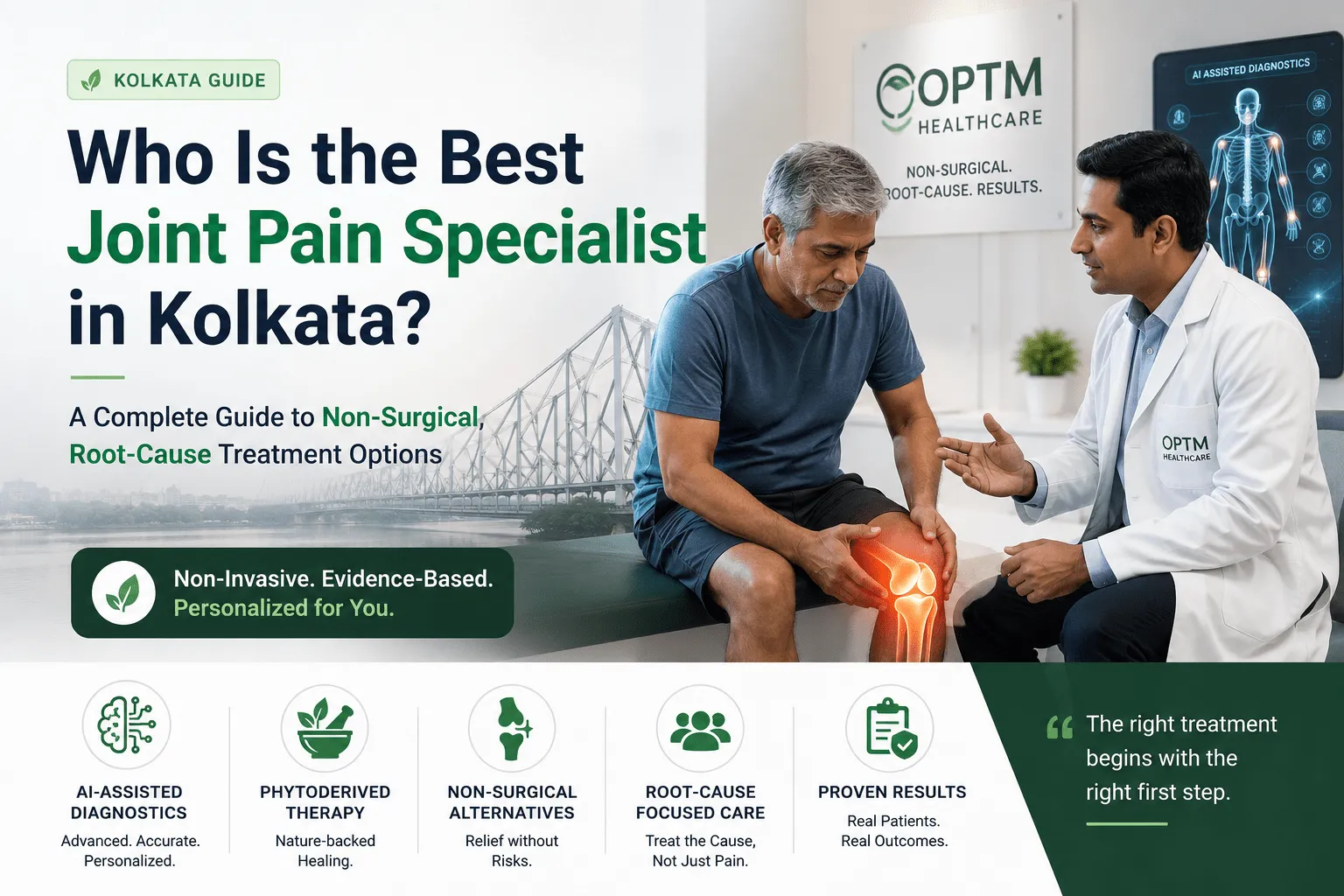
Best Orthopaedic Doctor in Kolkata: A Guide That Does Not Start With Surgery
Persistent joint pain has a way of shrinking your world. A walk through New Market starts to feel like a mission. An evening stroll along the Hooghly gets shorter every month. Stairs become something to plan around rather than climb without thinking.
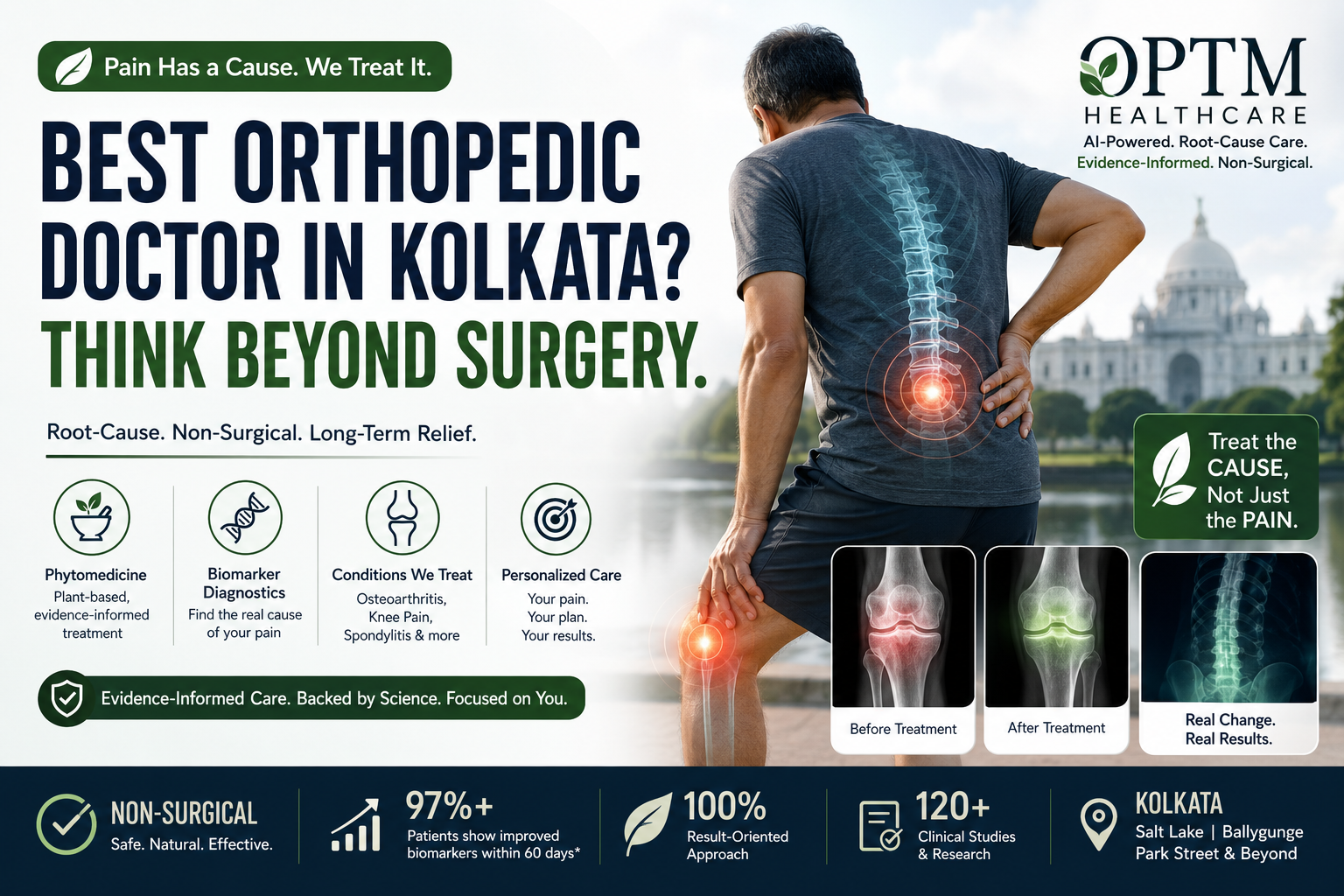
Quick Answer: The best orthopedic doctor in Kolkata for chronic joint pain may not be a surgeon. OPTM Healthcare offers an AI-guided, non-surgical approach using pharmaceutical-grade phytomedicine — targeting the root biological causes of osteoarthritis, spondylitis, and degenerative knee pain without scalpels or steroids. With 100,000+ successfully treated patients [Source] and 89% surgery avoidance [Source], this diagnostics-first protocol changes what recovery looks like.
When the pain becomes impossible to ignore, most people type the same phrase into Google: "best orthopedic doctor Kolkata." What they are picturing is a surgeon — someone who can operate, replace, or repair. But for chronic, degenerative conditions like osteoarthritis, spondylitis, and long-standing knee pain, surgery is not always the first — or best — answer. A growing number of patients across Salt Lake, New Town, Ballygunge, and Park Street are looking for specialists who treat the root cause of joint degeneration rather than just its symptoms.
Key Takeaways
- Reconsider the default. For chronic joint pain, the best specialist in Kolkata is not automatically a surgeon — root-cause-focused clinics are a credible alternative.
- AI diagnostics change everything. OPTM Healthcare combines 60+ biomarker AI analysis with pharmaceutical-grade phytomedicine, achieving 94%+ patient satisfaction [Source].
- Personalised over generic. The most effective treatment plans are built around your specific biomarker profile — not a standardised protocol.
- Pitfalls are avoidable. Over-reliance on painkillers, rushing to surgery, and accepting one-size-fits-all protocols are all preventable with the right first consultation.
- Evidence first. Always ask any clinic for outcomes data, patient results, and a clear explanation of why a specific treatment fits your case.
Orthopedic Care in Kolkata: Where the System Falls Short
Orthopedic care in Kolkata has traditionally centred on diagnosing musculoskeletal problems through structural imaging — X-ray, MRI, CT — and treating them with medication, physiotherapy, or surgery. This model works well for acute injuries: fractures, ligament tears, structural damage requiring mechanical correction.
Where it consistently struggles is with chronic, degenerative conditions — the kind that develop silently over years and have no single structural fix. Osteoarthritis wears down cartilage gradually. Spondylitis involves ongoing inflammation in the spine. For these conditions, patients describe a familiar, frustrating cycle:
- A course of NSAIDs or steroid injections brings 4–6 weeks of relief
- The pain returns, often worse than before
- The next recommendation is increasingly invasive — and eventually, surgery
This is the gap that AI-guided, root-cause medicine aims to close: treating the biological process driving degeneration, not just the pain it produces.
Why Kolkata Patients Are Looking Past Surgery
Three factors are driving the shift toward non-surgical options in West Bengal:
- Symptom relief has limits. Painkillers and injections manage symptoms temporarily but do nothing to halt the underlying degenerative process. Patients find themselves in a cycle of escalating medication with diminishing returns.
- Surgery carries trade-offs. Even a successful knee replacement has a finite lifespan of 15–20 years, requires 3–6 months of recovery, and carries risks of infection (1–2%), blood clots (2–5%), and persistent stiffness. Revision surgery costs 40–70% more with higher complication rates.
- Restoration, not suppression. Patients want more than a lower pain score — they want to walk without a limp, climb stairs without hesitation, and return to the activities that define their quality of life.
OPTM Healthcare Kolkata: The AI-Diagnostics + Phytomedicine Protocol
OPTM Healthcare's Kolkata clinic, located in Gariahat, begins from a fundamentally different question than conventional orthopaedics. Instead of "what procedure fixes this joint?" the clinical team asks: "what is biologically driving this degeneration — and can it be reversed without surgery?"
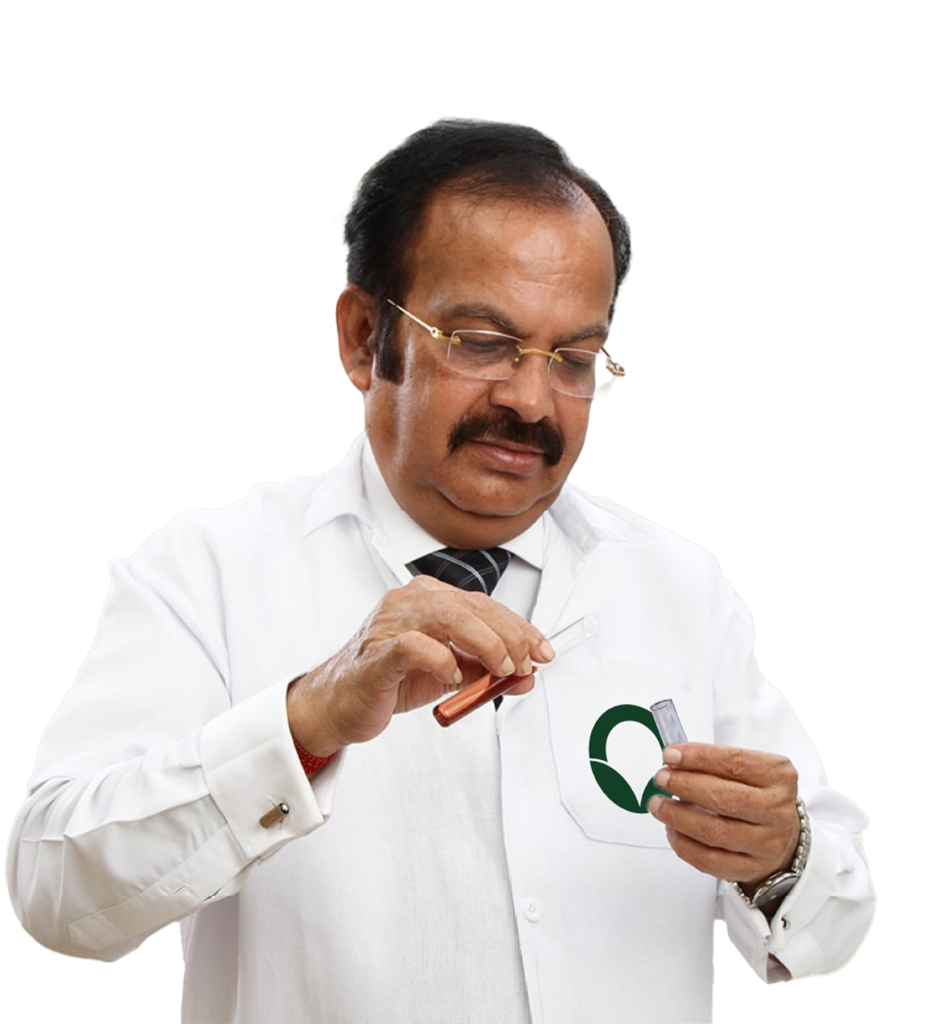
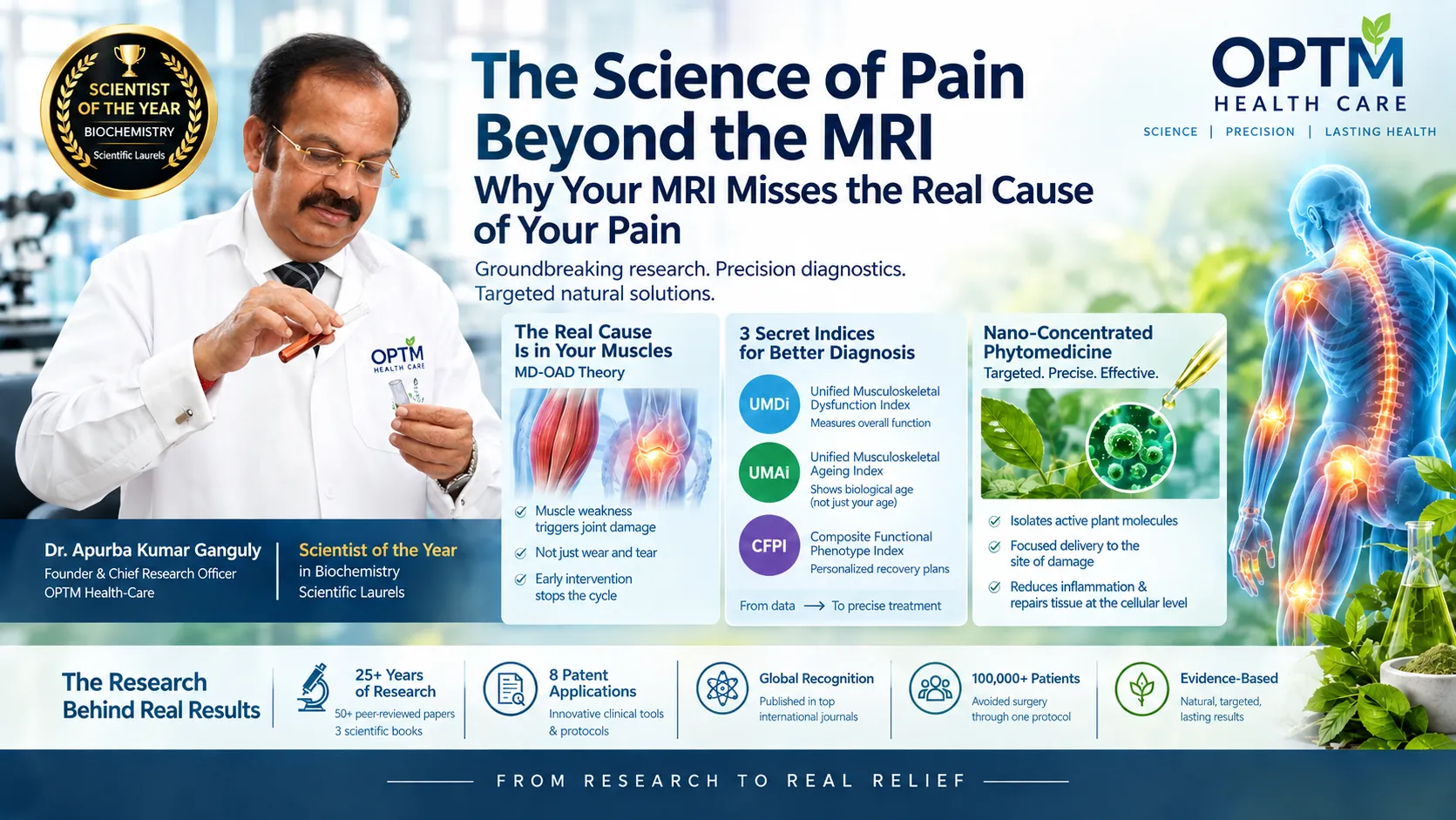
Developed from over 35 years of musculoskeletal research by Dr. Apurba Ganguly, PhD, the protocol follows a structured four-stage process:
| Stage | Focus | What Happens |
|---|---|---|
| 1. AI-Powered Diagnosis | Cellular-level assessment | Analysis of 60+ inflammatory and metabolic biomarkers using an AI engine trained on 100,000+ clinical cases. |
| 2. Personalised Treatment Design | Targeted phytomedicine protocol | A pharmaceutical-grade plant compound regimen calibrated to the patient's unique inflammatory profile. |
| 3. Monitored Treatment Phase | Active recovery (42-day protocol) | Biomarker reassessments every 14 days with protocol adjustments based on objective progress markers. |
| 4. Long-Term Joint Maintenance | Sustained joint health | Preventing relapse through lifestyle integration and periodic maintenance protocols. |
Phytomedicine: The Science Behind the Approach
Phytomedicine uses pharmaceutical-grade, standardised plant extracts — not generic herbal remedies. Each compound is extracted, purified, and quantified for consistent active ingredient concentration. AI analysis matches each formulation to the patient's biomarker profile, ensuring that specific inflammatory drivers are targeted with precision.
The scientific mechanism is well-documented in peer-reviewed literature. Plant secondary metabolites modulate inflammatory pathways at the molecular level:
- Cytokine modulation: Inhibition of IL-1β, IL-6, and TNF-α signalling
- Oxidative stress reduction: Neutralisation of free radicals that accelerate joint degradation
- Chondrocyte stimulation: Activation of cartilage-producing cells for matrix repair
- MMP inhibition: Blockade of cartilage-degrading matrix metalloproteinases
This approach shifts the therapeutic goal from symptom suppression to tissue-level restoration — creating the biochemical conditions for the body to repair its own damaged joint tissue.
How to Evaluate a Non-Surgical Specialist in Kolkata
Not all non-surgical clinics are the same. Here is a structured framework for comparison:
| Feature | Traditional Orthopedic Surgeon | Non-Surgical Specialist (OPTM) |
|---|---|---|
| Primary Focus | Surgical repair, joint replacement | Root-cause identification, non-invasive restoration |
| Initial Path | Medication → injections → physiotherapy → surgery | Diagnostics-first → targeted phytomedicine therapy |
| Chronic Pain Approach | Symptom control, structural correction | Inflammation reduction, tissue-level repair |
| Risk Profile | Higher — anaesthesia, infection, complications | Lower — non-invasive, minimal side effects |
| Diagnostic Tools | X-ray, MRI, CT (structural imaging) | AI-assisted biomarker analysis (cellular/inflammatory) |
| Long-Term Goal | Functional improvement post-surgery | Sustained pain-free mobility without surgery |
Surgery vs. Phytomedicine: Direct Comparison
| Aspect | Knee Replacement Surgery | Phytomedicine Therapy |
|---|---|---|
| Hospital Stay | 3–7 days | None (outpatient) |
| Recovery Time | 6–12 weeks | Zero downtime |
| Anaesthesia Risk | Yes | None |
| Infection Risk | 1–2% | None |
| Implant Lifespan | 15–20 years (may require revision) | N/A — biological repair |
| Pain Reduction | Immediate post-op | Progressive over 4–10 weeks |
| Cost (Kolkata) | ||
| Lifetime Risk | Revision surgery, long-term complications | Minimal |
Common Pitfalls in Joint Pain Treatment
Patients seeking joint pain relief in Kolkata often encounter five recurring problems:
- Over-reliance on painkillers. NSAIDs and corticosteroids provide temporary relief but do not address the underlying cause. Long-term use carries significant GI, renal, and bone-density risks.
- Rushing to surgery. Many patients are advised joint replacement as a first-line treatment without being informed of non-surgical alternatives. Second opinions from non-surgical specialists are rarely sought before irreversible decisions are made.
- Generic protocols. Standardised physiotherapy regimens applied uniformly — regardless of biomarker profile — consistently underperform compared with personalised approaches.
- Ignoring metabolic drivers. Vitamin D deficiency, insulin resistance, and systemic inflammation are common contributors to joint pain that conventional orthopaedic assessments routinely miss.
- No objective follow-up. Without repeat biomarker testing, there is no way to measure whether treatment is actually reversing the underlying pathology.
Patient Outcomes: What Recovery Looks Like
A 58-year-old Kolkata resident presented with Grade 3 knee osteoarthritis and had been advised bilateral knee replacement. Her biomarker panel revealed severe vitamin D deficiency and elevated IL-6 and TNF-α. After a 10-week personalised phytomedicine protocol, she reported 80% pain reduction and resumed daily walks without discomfort. At 12-month follow-up, her improvement was maintained — surgery avoided entirely.
A 45-year-old office worker with chronic lower back pain from spondylitis had been managed on NSAIDs for three years. OPTM diagnostics identified specific inflammatory cytokine elevations. An 8-week targeted protocol achieved 70% pain reduction and she discontinued painkillers entirely.
"I had resigned myself to a life of pain management rather than cure. After OPTM, I can walk to the market, play with my grandchildren, and sleep through the night without pain."
Frequently Asked Questions
What is the best natural treatment for knee pain in Kolkata?
Effective natural treatment starts with identifying the specific cause — inflammation, cartilage wear, or both — through AI-powered biomarker diagnostics. then can a targeted treatment plan such as personalised phytomedicine be prescribed. Without accurate root-cause diagnosis, no treatment can be truly effective.
How effective is phytomedicine for joint pain in West Bengal?
Phytomedicine has demonstrated strong clinical outcomes for chronic conditions like osteoarthritis and spondylitis. OPTM's published data shows 94%+ patient satisfaction across 100,000+ treated patients. Individual outcomes vary based on degeneration stage, protocol adherence, and metabolic co-factors.
Can osteoarthritis be treated without surgery in Kolkata?
Yes. Non-surgical options including AI-guided phytomedicine therapy, physiotherapy, and lifestyle intervention are viable for most osteoarthritis cases — particularly early-stage to moderate degeneration. Even advanced cases often achieve significant functional improvement without surgery.
What are the alternatives to knee replacement surgery in India?
Alternatives include AI biomarker-guided phytomedicine protocols, structured physical therapy, lifestyle and weight management, and certain regenerative approaches. The right option depends on your specific biomarker profile and stage of joint degeneration.
Where can I find an AI-powered pain management clinic in Kolkata?
OPTM Healthcare's Kolkata clinic at Gariahat offers AI-assisted diagnostics for chronic joint pain. The full biomarker assessment costs and provides a complete picture of your joint health within 24–48 hours.
Is non-surgical treatment right for every joint condition?
No. Acute fractures, severe structural instability, and certain advanced degenerative cases may still require surgical intervention. The key is to explore non-surgical options before making an irreversible decision about surgery — and to let objective diagnostics guide the choice.
Final Thoughts
Finding the best orthopedic doctor in Kolkata depends entirely on what you need. For an acute fracture or traumatic injury, a skilled orthopaedic surgeon is essential. But if you are living with chronic joint pain — osteoarthritis that has been gradually worsening, spondylitis that flares without warning, knee pain that limits how you move through your day — the best doctor may be one who never reaches for a scalpel.
OPTM Healthcare's Kolkata clinic represents a growing shift toward non-surgical, root-cause medicine for joint health. With AI-powered diagnostics and pharmaceutical-grade phytomedicine, the goal is not to manage pain indefinitely but to address the biological drivers of joint degeneration and restore pain-free mobility.
Ready to Explore Your Non-Surgical Options?
Book an initial AI biomarker assessment at OPTM Healthcare Kolkata for . Results within 24–48 hours.
Book the Assessment
Book your AI biomarker diagnostic assessment today
Related Clinical Resources