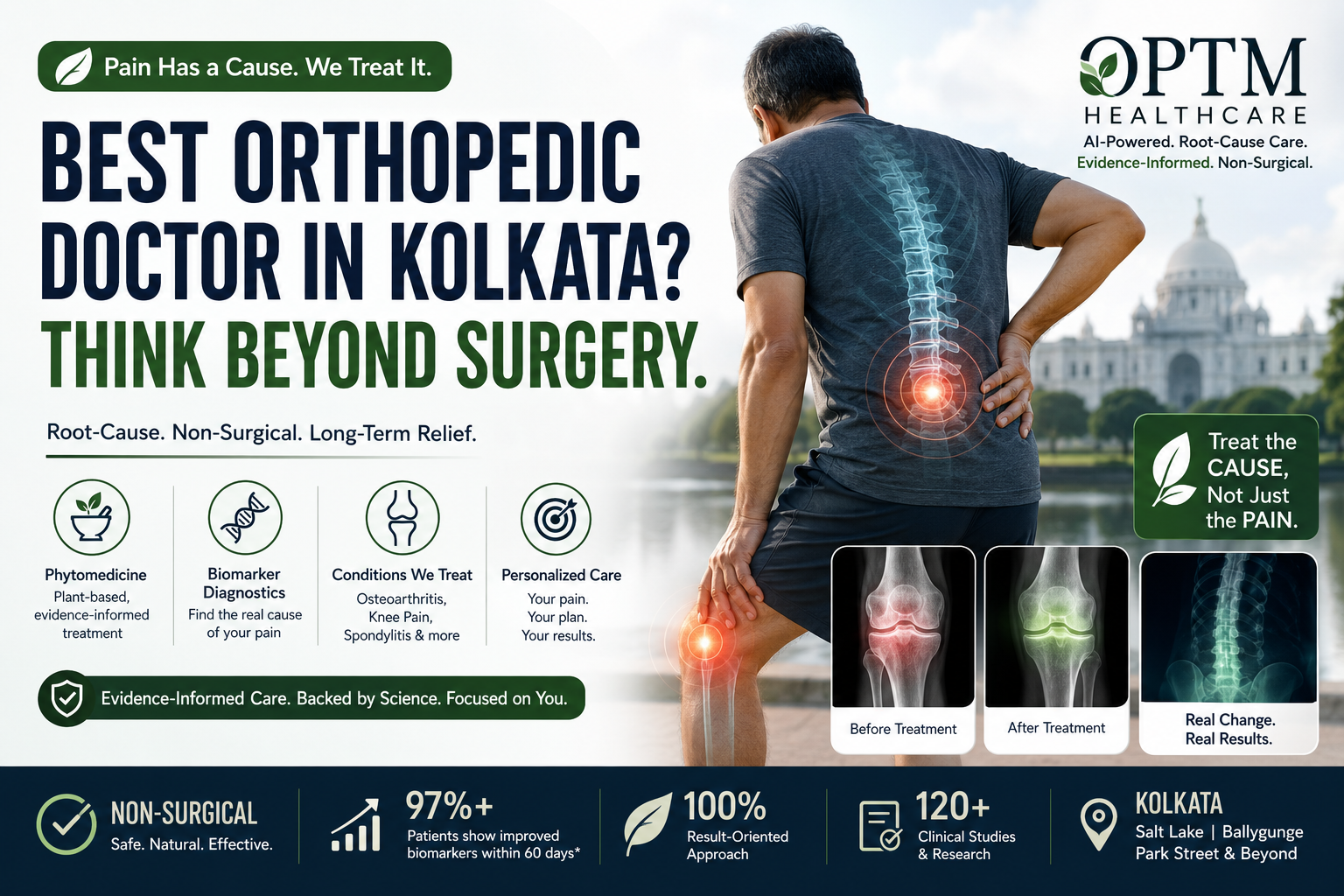
Chronic Back Pain Specialist Near Me: OPTM in Kolkata, Delhi, and Panchkula
“Chronic back pain specialist near me” is what people type when sitting has become a negotiation and every doctor repeats the same half-answers. You do not need another generic painkiller plan — you need a clinic that measures why your spine is still angry.
Quick Answer: OPTM’s spine clinics in Delhi, Kolkata, and Panchkula combine AI biomarker diagnostics with non-surgical disc rehydration and phytomedicine — helping many patients avoid epidural dependency and fusion pathways when emergency neurology is absent
What “Near Me” Should Actually Mean
Proximity matters. Capability matters more. A nearby clinic that rotates NSAIDs and “avoid heavy lifting” advice is geographically convenient and clinically incomplete. The right specialist maps inflammation, disc hydration status, muscle drivers, and nerve irritability — then builds a plan you can execute without disappearing from work for three months.
- Delhi — South Extension: High-volume spine and movement cases from NCR.
- Kolkata — Gariahat: Eastern India hub for disc and sciatica protocols.
- Panchkula — Sector 11: Tricity access for Chandigarh-region patients.
Why Chronic Back Pain Outlasts Standard Care
Discs dehydrate. Facets overload. Muscles guard. Sleep fragments. Cytokines rise. Each loop tightens the next. Traditional care often picks one loop — a pain tablet, a few physio sessions, an epidural — then is surprised when pain returns. OPTM treats the network: chemistry first, structure in context, movement as prescription not punishment.
AI Diagnostics for Spine Patients
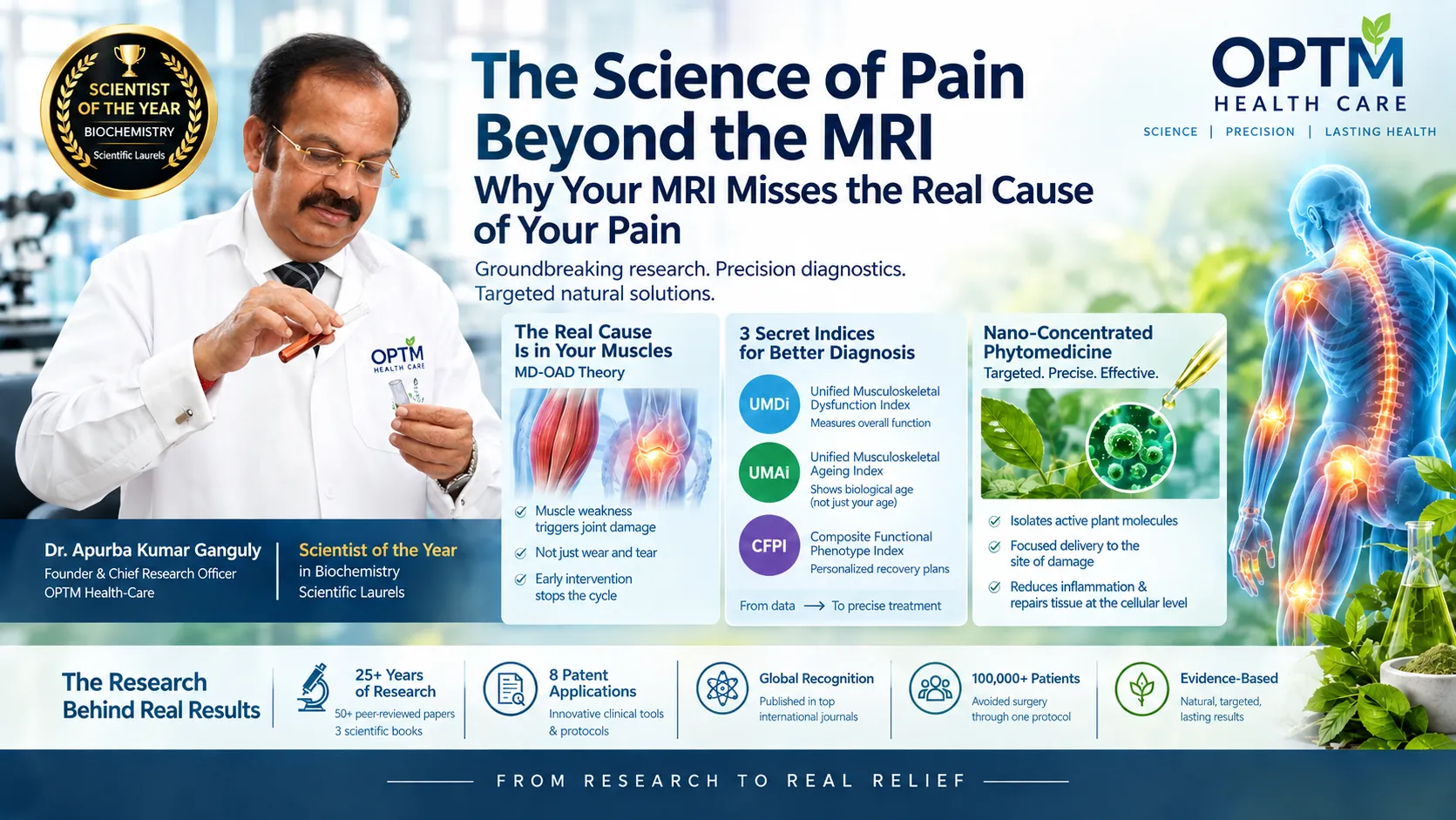
The assessment includes history, exam, imaging review when available, and multi-marker blood analysis interpreted with 97% diagnostic accuracy [Source] methodology for identifying dominant biochemical drivers. That is how “non-specific low back pain” becomes a named set of targets.
| Capability | Typical ortho/pain clinic | OPTM spine protocol |
|---|---|---|
| Root-cause blood mapping | Uncommon | Core AI panel |
| Disc rehydration focus | Rare | Protocol centrepiece |
| Default to injection/surgery | Often early | After measured non-surgical trial |
| Objective retesting | Symptom- follow-up | Markers + function scores |
| Surgery avoidance intent | Variable | 89% [Source] class outcomes where suitable |
Spinal Rehydration in Plain Language
Intervertebral discs hold water through proteoglycan chemistry. Inflammatory cytokines and metabolic stress starve that chemistry. Rehydration protocols aim to restore matrix water-binding capacity, reduce bulge-related nerve crowding, and calm radicular pain — without fusing motion segments. Many patients notice leg or arm pain easing within 2–3 weeks as peri-neural inflammation falls, with structural trends tracked over longer windows.
Red Flags: When “Near Me” Means Emergency Department
- Bladder or bowel dysfunction, saddle numbness (possible cauda equina).
- Rapidly progressive leg or arm weakness.
- Fever with severe back pain (possible infection).
- History of cancer with new unrelenting night pain.
- Major trauma with inability to walk.
These are not phytomedicine-first scenarios. Everything else chronic and stable deserves a precision non-surgical evaluation before elective fusion conversations harden into fate.
What Treatment Feels Like Day to Day
- Assessment week: Map drivers; explain MRI language without fear theatre.
- Active protocol: Personalised phytomedicine, load rules, mobility drills matched to tolerance.
- Midpoint check: Symptom scores and often repeat markers.
- Exit plan: Maintenance so you are not back at square one in monsoon or desk season.
Across OPTM’s multi-decade practice, 100,000+ patients [Source] have been treated organisationally for musculoskeletal conditions, with high satisfaction (94%+ [Source]) among those completing protocols.
How to Choose Your Clinic Visit
Pick the city you can reach consistently for the intensive phase. Delhi suits NCR; Kolkata suits eastern India; Panchkula suits Tricity. Call +91 33 63, bring prior imaging, and ask for the spine-focused AI assessment. Same-week slots are frequently available.
Chronic back pain is common. Untreated biochemical drivers are optional. A specialist near you should mean a specialist who can measure, explain, and reverse — not merely manage your calendar of flares.
How to Interview a Back Pain Specialist in 10 Minutes
- What is your non-surgical success pathway before fusion talk?
- Which blood or metabolic markers do you use in chronic cases?
- How do you decide epidural versus rehydration-focused care?
- What objective measures define improvement at week 6?
- When do you refer out for emergency or complex deformity care?
Specialists who answer crisply are practising medicine. Specialists who deflect to “we’ll see after the next MRI” may be practising delay. OPTM’s answers are operational: AI panel, personalised phytomedicine, load rules, retesting, and clear red-flag exits.
Workplace Back Pain: NCR, Kolkata Desks, and Tricity Commutes
Laptop culture creates flexion-intolerant lumbar patterns and scapular-driven neck pain. Commutes add vibration and prolonged sitting. A near-me specialist who never asks about desk height, drive time, and sleep setup will under-prescribe the environmental half of recovery. OPTM visits routinely convert those details into rules patients can actually follow — not a generic “sit straight” poster.
For remote workers between Delhi and Panchkula, or families splitting time with Kolkata parents, network continuity matters. Shared protocol language across clinics means your marker history travels with you better than a stack of unreadable discharge summaries.
Family Caregivers and the Hidden Load of Chronic Spine Pain
Spouses become unpaid physiotherapists. Children rearrange travel. Parents hide pain to avoid being “a burden.” A competent specialist near you should speak to caregivers, set shared expectations, and prevent boom-bust activity cycles where good days cause overdoing and bad weeks of relapse. Natural, non-surgical recovery is a household project with a clinical quarterback.
If you have searched “chronic back pain specialist near me” more than once this year, treat that search history as data: standard care has not closed the loop. Book the AI assessment in Delhi, Kolkata, or Panchkula, bring imaging, and insist on a chemical-plus-structural plan. With organisational outcomes spanning 100,000+ patients [Source] and surgery-avoidance intent at 89% [Source] for suitable candidates, the near-me clinic you want is the one that measures before it cuts — and rehydrates before it fuses.
Travel Checklist for Your First Spine Visit
- MRI/X-ray reports and discs if available.
- Medicine list with doses and start dates.
- Photo of your workstation if desk-driven pain dominates.
- Notes on bladder/bowel changes (for red-flag screening).
- Your top three functional goals in writing.
Arrive as a partner, not a passenger. The best “specialist near me” outcome starts before you sit down — with preparation that respects both your time and the clinic’s diagnostic depth.
Frequently Asked Questions
Q: Do you treat cervical (neck) pain as well as lumbar pain?
A: Yes. Cervical disc disease, radiculopathy, and spondylosis are managed with the same precision principles calibrated to level and markers.
Q: Is bed rest recommended?
A: Prolonged bed rest usually worsens outcomes. Relative rest plus guided movement is preferred once red flags are excluded.
Q: Can I continue working during treatment?
A: Most patients do, with ergonomic and load modifications. There is no surgical downtime.
Q: What if my MRI is “normal” but I still hurt?
A: That pattern is common. Biomarkers and functional assessment often reveal inflammatory or muscular drivers imaging misses.
Q: How do I book the nearest clinic?
A: Call +91 33 63 or book online. Choose Delhi, Kolkata, or Panchkula based on access — the clinical model is shared.
Book the Assessment
Book your AI biomarker diagnostic assessment today
Related Clinical Resources