The Science of Cellular Rehydration in Spinal Restoration
Your spine is not failing because you “slept wrong.” Intervertebral discs are living hydraulic tissues — and when they dry out, height collapses, nerves get crowded, and everyday movement starts to feel like risk management.
Quick Answer: Spinal disc rehydration restores the water-binding capacity of the nucleus pulposus using AI-guided phytomedicine and metabolic correction — reducing bulging, nerve compression, and the pathway toward fusion surgery without injections or implants
Healthy discs are roughly 70–80% water [Source] in young adults. That water is not passive fluid; it is held by proteoglycan-rich matrix that acts like a molecular sponge. Lose the sponge, and you lose disc height, shock absorption, and the cushion that keeps nerve roots free.
The Hydraulic Engineering of the Human Spine
Each intervertebral disc has two cooperating structures: a gel-like nucleus pulposus and a laminated fibrous ring called the annulus fibrosus. Under load — sitting, walking, lifting — the nucleus pressurises and the annulus contains that pressure, distributing force across the endplates.
When nucleus hydration falls, internal pressure drops. Load shifts to the outer annulus and facet joints. The disc may bulge, fissure, or herniate. The problem looks structural on MRI, but the upstream failure is often cellular: nucleus cells stop producing the proteoglycans that attract and retain water.
- Young healthy disc: High proteoglycan content, elastic height, even load distribution.
- Dehydrated disc: Reduced height, annular stress, early nerve encroachment.
- Herniated / stenotic stage: Nuclear material or bony narrowing compresses neural structures — pain, numbness, weakness.
Why Discs Dehydrate: Inflammation, Not Just Age
Ageing matters, but it is not the whole story. Inflammatory cytokines such as IL-1β and TNF-α inhibit nucleus-cell activity and accelerate matrix breakdown. Oxidative stress, vitamin D deficiency, metabolic syndrome, and chronic muscle imbalance amplify the same pathway. Two 55-year-olds can have very different disc biology — one still hydrating under load, one collapsing under desk-job compression and systemic inflammation.
What imaging shows vs what blood reveals
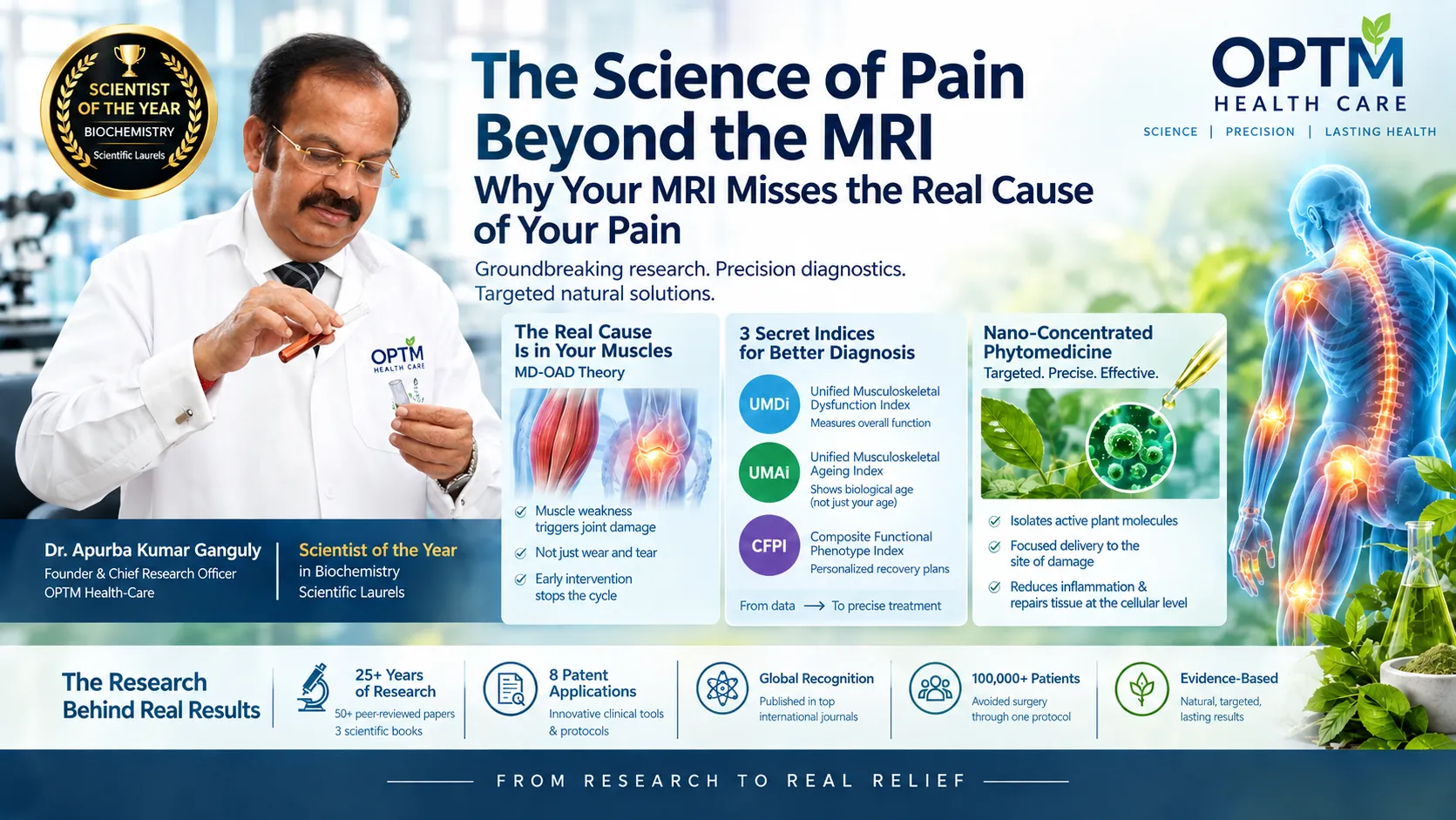
MRI shows geometry: height loss, Modic changes, herniation morphology. It does not show why proteoglycan synthesis collapsed. That is why patients hear “mild degeneration” while living with severe pain — structure and chemistry are not the same measurement.
How Cellular Rehydration Restores Disc Function
OPTM’s spinal protocol treats disc dehydration as a biochemical failure first. Pharmaceutical-grade phytocompounds and metabolic correction aim to:
- Down-regulate inflammatory cytokines that suppress nucleus-cell function.
- Support proteoglycan synthesis so the nucleus can re-attract water.
- Reduce peri-neural inflammation that drives sciatica and radicular pain.
- Correct co-drivers such as vitamin D deficit, muscle enzyme imbalance, and oxidative stress.
- Guide load and mobility so rehydrating tissue is not overloaded during recovery.
Clinical series at OPTM report measurable disc-height improvement alongside symptom relief within a structured protocol window — with many surgical candidates avoiding epidural dependency and fusion pathways. Overall musculoskeletal outcomes include 89% surgery avoidance [Source] among appropriately selected patients and 100,000+ treated patients [Source] across the organisation’s multi-decade practice.
Spinal Fusion & Epidurals vs Rehydration: A Clear Comparison
| Factor | Epidurals / Fusion pathway | OPTM disc rehydration |
|---|---|---|
| Primary target | Nerve inflammation or segmental motion | Disc matrix hydration + systemic drivers |
| Invasiveness | Injection or open/minimally invasive surgery | Non-surgical outpatient protocol |
| Recovery downtime | Days to months | No hospital stay; work continues for most |
| Diagnostics | MRI / clinical exam emphasis | MRI context + AI biomarker panel |
| Goal | Symptom control or permanent immobilisation | Tissue-level restoration where possible |
Who Responds Best — And When Surgery Is Still Urgent
Non-surgical rehydration is appropriate for many patients with disc bulge, contained herniation, degenerative disc disease, and radiculopathy without emergency red flags. Seek emergency care immediately for cauda equina signs (bladder/bowel dysfunction, saddle anaesthesia), progressive motor weakness, or rapidly worsening neurological deficit — these are not “wait and try phytomedicine” scenarios.
- Strong candidates: Chronic lumbar or cervical radiculopathy, multi-level dehydration without instability, failed long-term NSAIDs/physiotherapy alone.
- Need careful triage: High-grade stenosis with myelopathy, traumatic fracture, infection, tumour, or true surgical instability.
What the 42-Day Spinal Protocol Looks Like
Assessment (
Case history, physical examination, review of existing imaging, and a multi-marker blood panel analysed by OPTM’s AI engine (97% diagnostic accuracy [Source] in published internal methodology vs imaging- pathways). Results typically guide a personalised plan within 24–48 hours.
Active treatment phase
Targeted phytomedicine for cytokine and matrix pathways, metabolic correction, and movement prescription calibrated to your load tolerance. Many patients notice radicular pain easing before structural imaging catches up — that sequence is expected when chemistry improves first.
Reassessment
Symptom scores, function, and often repeat biomarkers at protocol milestones (commonly around days 21 and 42). Maintenance planning follows for patients who stabilise.
Clinics in Delhi, Kolkata & Panchkula
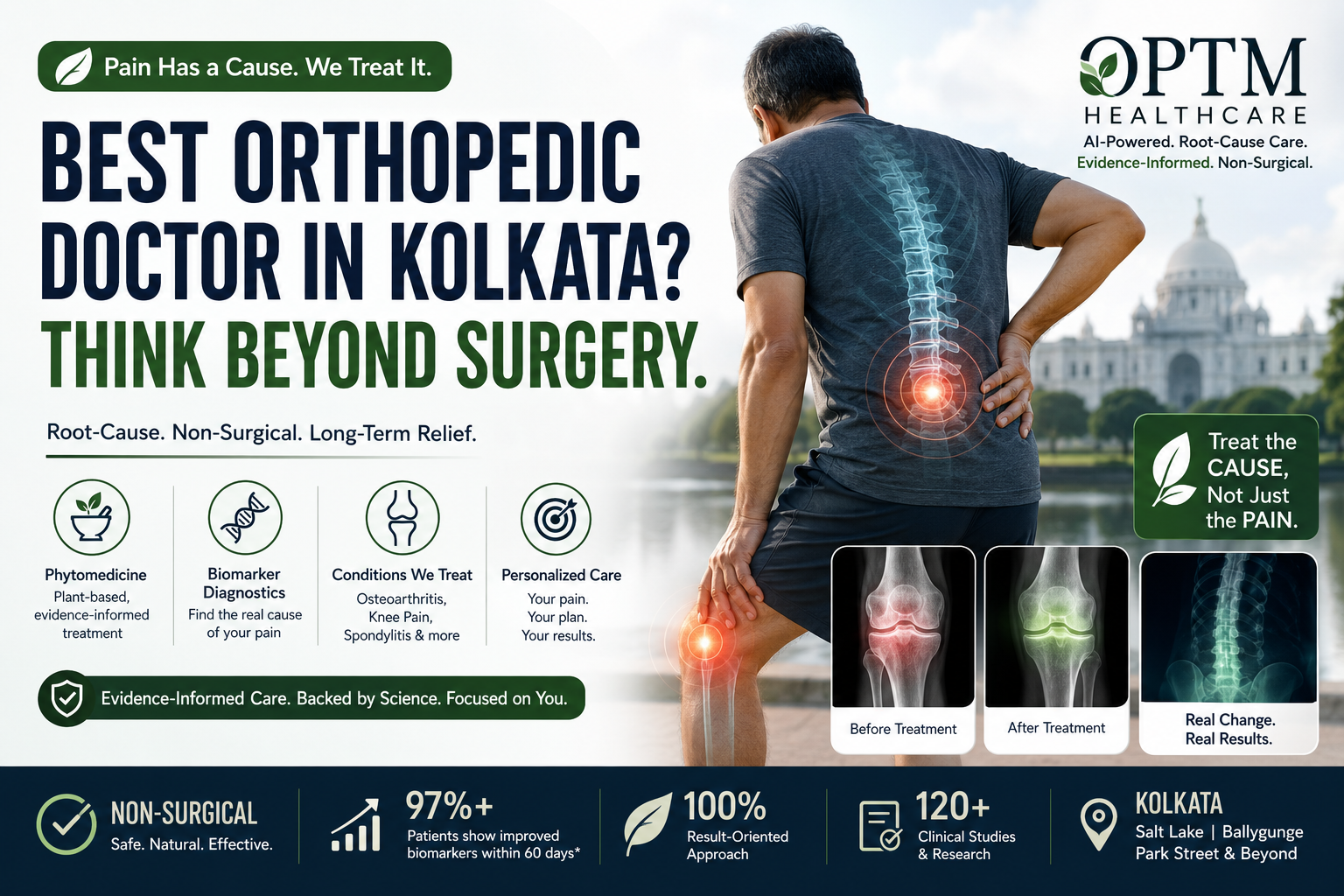
Spinal rehydration is available at OPTM clinics in Delhi (South Extension), Kolkata (Gariahat), and Panchkula (Sector 11). Patients travel from across NCR, West Bengal, and Tricity for biomarker-first spine care rather than a rush to fusion.
If you have been told your options are “live with it,” monthly epidurals, or spinal fusion, start with objective chemistry — not another mute button on the alarm.
Daily Life Patterns That Accelerate Disc Drying
Disc nutrition is partly load-dependent. Discs lack a direct blood supply; they exchange fluid through endplates during cycles of compression and relief. All-day sitting without standing breaks, high-mileage driving, and “weekend warrior” lifting after sedentary weeks all reduce healthy fluid exchange. Add systemic inflammation from poor sleep, central adiposity, or chronic stress, and nucleus cells receive a double insult: mechanical starvation plus chemical suppression.
Patients in desk-heavy careers across Delhi NCR and Kolkata corporate corridors often present with multi-level dehydration long before they consider themselves “old enough” for spine disease. Rehydration protocols therefore pair phytomedicine with micro-movement rules: sit-stand ratios, hip-hinge mechanics for lifting, and walking snacks that restore diurnal fluid pumping without aggressive flexion binges.
Sleep, nicotine, and metabolic syndrome
Nicotine impairs disc microcirculation. Uncontrolled glucose and low-grade metabolic syndrome amplify cytokine tone. Fragmented sleep raises pain gain in the central nervous system so the same disc pathology feels louder. OPTM’s assessment surfaces these co-factors because ignoring them is how “good MRI improvements” still feel like clinical failure to the patient.
How We Talk About MRI Reports Without Fear Theatre
Words like “herniation,” “desiccation,” and “annular tear” are radiological descriptions, not destiny scripts. Population studies show disc findings are common in asymptomatic adults. The clinical question is correlation: does this level explain these dermatomes, this weakness pattern, this sitting intolerance? Biomarkers add a second axis — how hot is the chemical environment around that structure right now?
That dual reading is why two patients with “similar L4-L5 reports” receive different protocol intensities. One may be inflammation-dominant with high IL-6 and rapid early gains; another may be muscle-guarding dominant with slower structural trends but large functional wins once load is retrained. Precision is not a slogan; it is refusing to treat the PDF and the person as the same object.
For families comparing fusion quotes across corporate hospitals, the rational sequence is emergency rule-out, then biomarker-guided non-surgical trial when stable, then surgery if function and neurology demand it. OPTM’s published organisational outcomes frame 89% surgery avoidance [Source] among suitable musculoskeletal candidates — a statistic that makes sense when candidacy is honestly gated.
Frequently Asked Questions
Q: Can a herniated disc heal without surgery?
A: Often yes. Many herniations resorb naturally; OPTM accelerates recovery by restoring the biochemical environment for disc matrix repair when emergency neurology is absent.
Q: How soon will sciatica improve?
A: Nerve pain often eases within 2–3 weeks as peri-neural inflammation drops; measurable height change is tracked over subsequent weeks.
Q: Is cervical disc disease treated the same way?
A: The core biochemistry is shared. Cervical and lumbar protocols are calibrated to level, symptoms, and biomarkers — not a single generic “back formula.”
Q: What does the first visit cost?
A: The AI biomarker diagnostic assessment is at OPTM clinics in Delhi, Kolkata, and Panchkula. Call +91 33 63 to book.
Q: Will I need to stop working?
A: Most patients continue daily activities with load modifications. There is no hospital stay and no surgical recovery window.
Book the Assessment
Book your AI biomarker diagnostic assessment today
Related Clinical Resources