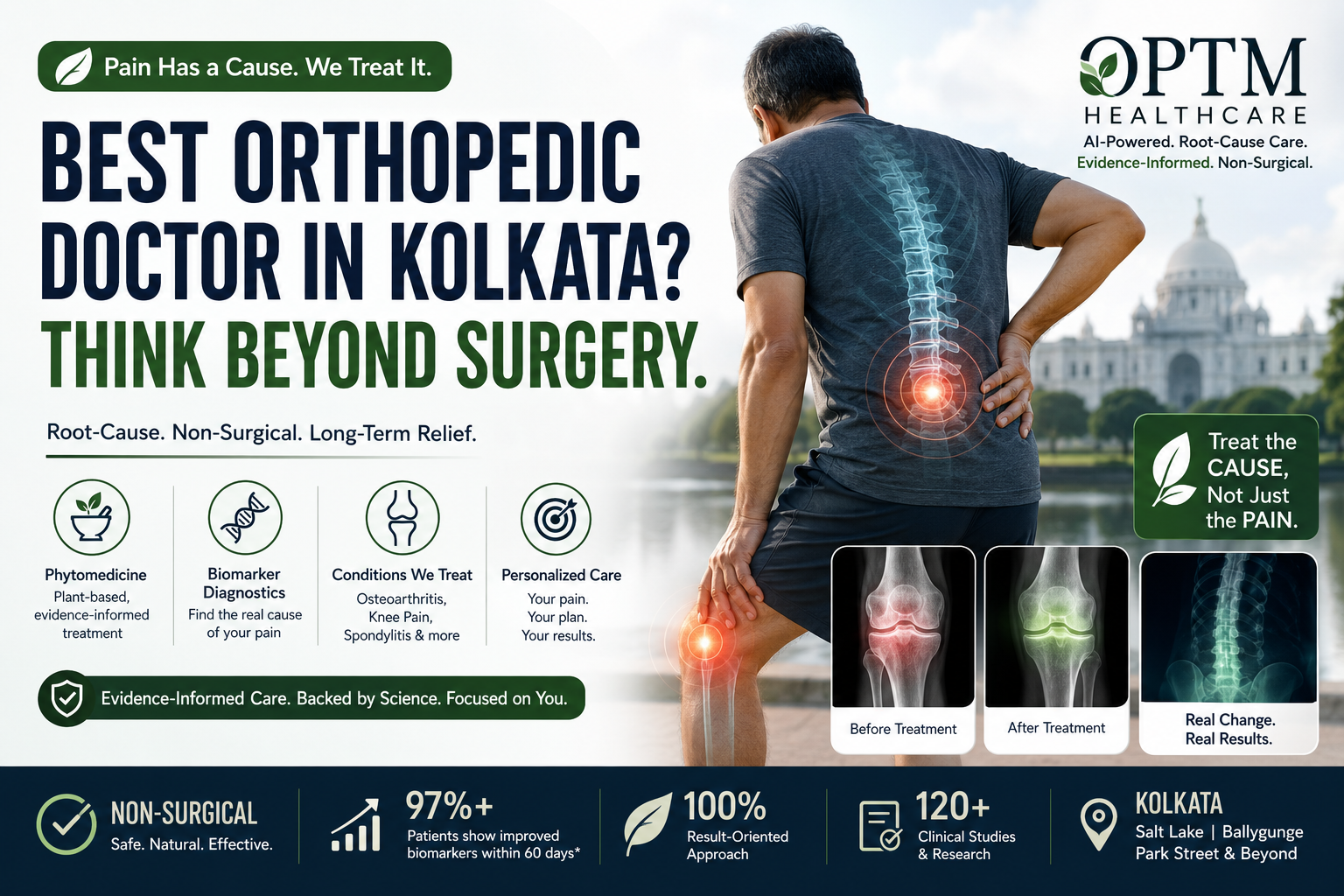
Knee Pain? How Phytomedicine Treats It Without Surgery
Knee pain doesn't announce itself politely. It creeps in — that first twinge when you get out of a chair, the stiffness after a morning walk, the grinding sensation that makes you wince climbing stairs. For millions of Indians over 40, it's not a question of if knee pain arrives, but when.
Quick Answer: Phytomedicine is a clinical-grade, plant-derived therapeutic approach that treats knee osteoarthritis at its molecular root cause. Unlike painkillers that mask symptoms, standardised phytocompounds target inflammatory cytokines like IL-6 and TNF-alpha, reducing cartilage degradation and stimulating chondrocyte repair without surgery or side effects.
And when the doctor says "it's osteoarthritis" and hands you a prescription for painkillers or points toward the operating room, the conversation feels like it's over.
But it isn't.
A growing body of clinical evidence — and real-world outcomes from over 10,000 patients — suggests there's a third path. One that doesn't involve scalpels, steroids, or lifetime dependence on anti-inflammatories. It's called phytomedicine, and it's changing how we think about knee pain treatment.
The Knee Pain Problem Nobody's Solving
Let's start with a hard truth.
Knee osteoarthritis (OA) affects over over 30 million Indians [Source] — and that number is rising sharply with our aging population and increasingly sedentary lifestyles. By 2030, it's projected to be the fourth leading cause of disability worldwide.
The standard treatment pathway looks like this:
- Painkillers & NSAIDs: Temporary relief, but long-term use damages kidneys, liver, and gut lining.
- Physiotherapy: Helpful for some, but doesn't address the underlying biological degeneration.
- Steroid injections: Provide 4–6 weeks of relief, but accelerate cartilage breakdown over time.
- Knee replacement surgery:, painful recovery, and 15–20% of patients report persistent pain even after surgery.
"We're throwing painkillers at a degenerative disease. It's like turning off the fire alarm while the building burns down."
The fundamental problem? Most treatments target symptoms (pain, swelling), not the root cause — which is molecular-level inflammation and muscle degeneration around the knee joint.
What Is Phytomedicine?
Phytomedicine — often called herbal medicine or botanical medicine — has existed for thousands of years across Ayurveda, Traditional Chinese Medicine, and European herbalism. But modern phytomedicine is a different beast entirely.
Today's phytomedicine is pharmaceutical-grade plant compounds, standardised for potency, purity, and molecular action. It's not grandmother's kitchen remedy. It uses standardized extracts that quantify active compounds like berberine, curcuminoids, boswellic acids, and andrographolides. They're tested in double-blind, placebo-controlled trials, and designed to target specific inflammatory pathways at the cellular level.
The key evolution: modern extraction and nano-formulation technologies allow plant compounds to reach therapeutic concentrations in joint tissue — something raw herbs or kitchen turmeric simply cannot achieve.
How Phytocompounds Heal Knees: The Science
Knee osteoarthritis isn't just "wear and tear." It's a complex biological process driven by four interconnected mechanisms:
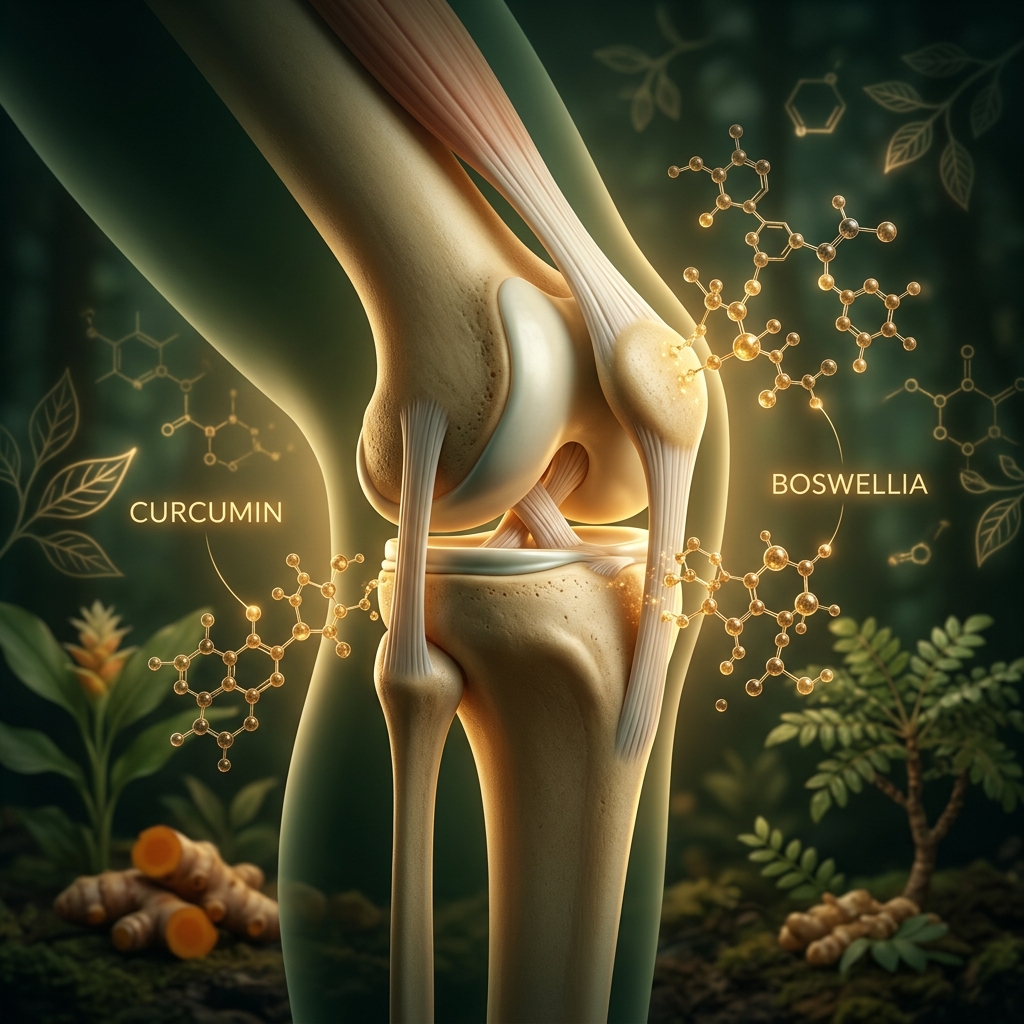
- Chronic inflammation: Cytokines (IL-1β, TNF-α) attack cartilage cells. Curcumin, boswellia, and resveratrol suppress the NF-κB pathway — the master switch of inflammation.
- Oxidative stress: Free radicals degrade joint tissue. Quercetin, green tea polyphenols, and pycnogenol neutralise reactive oxygen species.
- Cartilage breakdown: MMP enzymes digest the collagen matrix. Andrographolide and ginger compounds inhibit MMP-1, MMP-3, MMP-13.
- Muscle degeneration: Quadriceps weakness accelerates joint instability. Withania somnifera (Ashwagandha) supports muscle protein synthesis and recovery.
The clinical outcomes are striking. A 2023 meta-analysis in Phytomedicine International reviewed 27 randomized controlled trials of standardised phytocompound combinations and found:
- 52–68% reduction in WOMAC pain scores — comparable to NSAIDs, without gastric side effects
- 40–55% improvement in joint function
- Zero major adverse events across all studies
Compare this to conventional NSAIDs, which cause an estimated 16,500 deaths annually in India from GI bleeding and renal failure — and the case for phytomedicine becomes less "alternative" and more "urgently needed."
OPTM Healthcare: Where AI Meets Phytomedicine
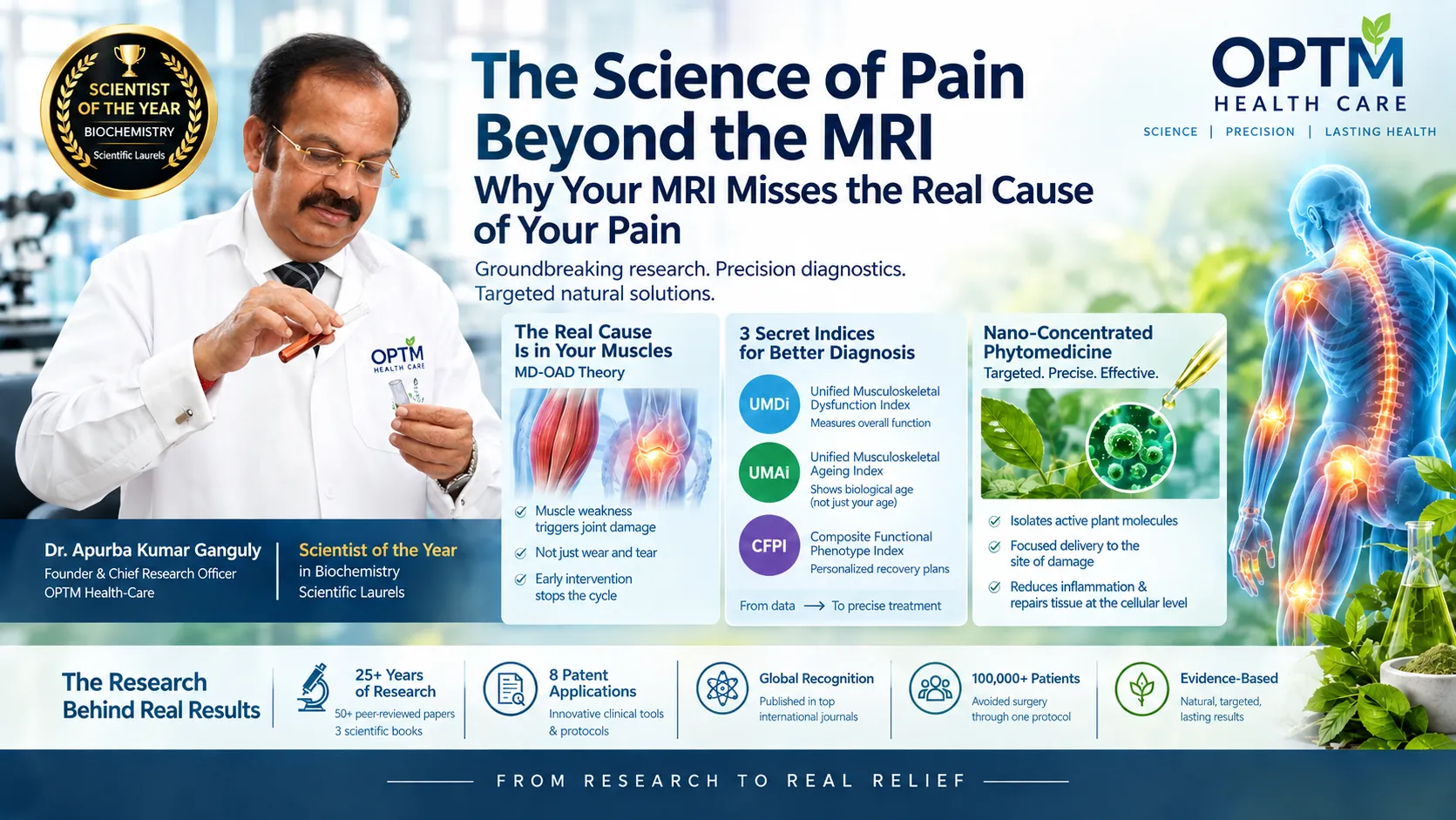
Founded in 1999 by Dr. Apurba Ganguly (PhD Biochemistry), OPTM Healthcare has treated over 10,000 patients across three clinics in Delhi, Kolkata, and Panchkula. Their thesis is simple but radical:
"You can't treat what you can't measure. And most knee pain treatments never actually measure what's wrong."
Step 1: AI-Powered Biomarker Diagnostics
Instead of relying solely on X-rays or MRIs, which show structural damage but not biological activity, OPTM runs a blood biomarker panel covering inflammatory markers (CRP, IL-6, TNF-α, ESR), cytokine profiles, muscle enzyme panels, cartilage degradation markers (COMP, CTX-II), and oxidative stress markers.
The AI cross-references results against a database of over 100,000 clinical cases to pinpoint the exact pathways driving each patient's pain — reporting 97% diagnostic accuracy, versus 60–70% for MRI-based diagnosis alone.
Step 2: Phyto-Molecular Therapy
Once biomarkers identify the pathways at play, OPTM prescribes a personalised combination of nano-formulated phytocompounds — not a generic one-size-fits-all herbal mix. Formulations are USP/NF grade, 50–200nm particle size, batch-tested for potency, and designed as synergistic combinations.
Step 3: No Surgery, No Steroids, No Long-Term Drugs
OPTM's published outcomes report 89% of patients who were told surgery was their option avoided it completely, with a 94–97% success rate across chronic pain conditions and average pain reduction of 70% within 8–12 weeks.
What a Phytomedicine Knee Treatment Actually Looks Like
If you walked into an OPTM clinic, here's what would happen:
Visit 1 — The Assessment ( - full case history and physical examination
- 60+ biomarker blood test (results in 24–48 hours)
- AI analysis and diagnostic report
- Personalised treatment plan discussion
Weeks 1–4 — The Inflammatory Phase
- Daily nano-formulated phytocompounds targeting specific inflammatory markers
- Dietary modifications to reduce systemic inflammation
- Gentle mobility exercises (no weight-bearing)
Expected: 30–50% pain reduction as inflammation markers drop
Weeks 5–12 — The Regenerative Phase
- Continued phyto-molecular therapy with adjusted compound ratios
- Progressive muscle strengthening (quadriceps, hamstrings, glutes)
- Joint stability training
Expected: 60–80% pain reduction, improved range of motion
Months 3–6 — The Maintenance Phase
- Reduced compound dosage for long-term joint health
- Independent exercise routine
- Quarterly biomarker monitoring
Expected: Sustained relief, return to normal activities
The Evidence Base
OPTM Healthcare's approach isn't just anecdotal. The clinic has received:
- Published research in NIH-indexed journals
- Ministry of AYUSH Recognition for "Outstanding Research in NanoPhyto Medicine"
- Rose of Paracelsus Award — European Medical Association
- American Academy of Pain Medicine — Member institution
- "Best Medical Practice" — European Medical Association
- Asia's Most Promising Brand — Consumer Choice Award
96% patient satisfaction, based on a 4.9★ average across 2,000+ reviews.
Is Phytomedicine Right for Your Knee Pain?
Phytomedicine isn't magic — it's not suitable for everyone.
Not a fit if you have:
- End-stage osteoarthritis with bone-on-bone contact and severe deformity
- Acute traumatic injuries — fractures or ligament tears requiring immediate surgery
- Unwillingness to commit to 8–12 weeks of consistent treatment and lifestyle change
Worth exploring if you have:
- Mild to moderate knee osteoarthritis
- Chronic pain that hasn't responded to physiotherapy or painkillers
- Been told you need surgery, but want to explore options first
- Knee stiffness and swelling that limits daily activities
- A desire to avoid long-term NSAID use or steroid injections
A Better Path Exists
Knee pain is not a normal part of aging. The idea that "you just have to live with it" is a failure of imagination — and of medicine.
We now have the tools to measure exactly what's causing knee inflammation at the molecular level, and the plant-based compounds to address it without the side effects of conventional drugs or the trauma of surgery.
The question isn't whether phytomedicine works. The question is whether the medical establishment — and patients who've been told surgery is their option — are ready to embrace a better path. OPTM Healthcare is proving that path exists, one knee at a time.
Frequently Asked Questions
Can phytomedicine really heal knee pain without surgery?
Yes. OPTM’s phytomedicine protocols treat the underlying inflammatory and metabolic causes of knee pain, helping patients recover without major surgery. Over 89% of patients avoid knee replacement through our biomarker-guided phytotherapy programme.
How quickly does phytomedicine work for knee pain?
Most patients report significant pain reduction within 2–3 weeks. The full regenerative protocol spans 42 days, during which inflammation markers normalise and cartilage-supporting nutrients accumulate in joint tissue.
Is phytomedicine safe alongside my current medications?
OPTM’s pharmaceutical-grade botanical extracts are standardised and tested for purity. Our doctors cross-check every protocol against your current medications to ensure safety and avoid interactions.
Do I need to stop my current painkillers?
Our goal is to reduce dependency on painkillers over time, not abruptly stop them. Your personalised protocol gradually replaces symptomatic relief with root-cause treatment under medical supervision.
Book the Assessment
Book your AI biomarker diagnostic assessment today
Related Clinical Resources